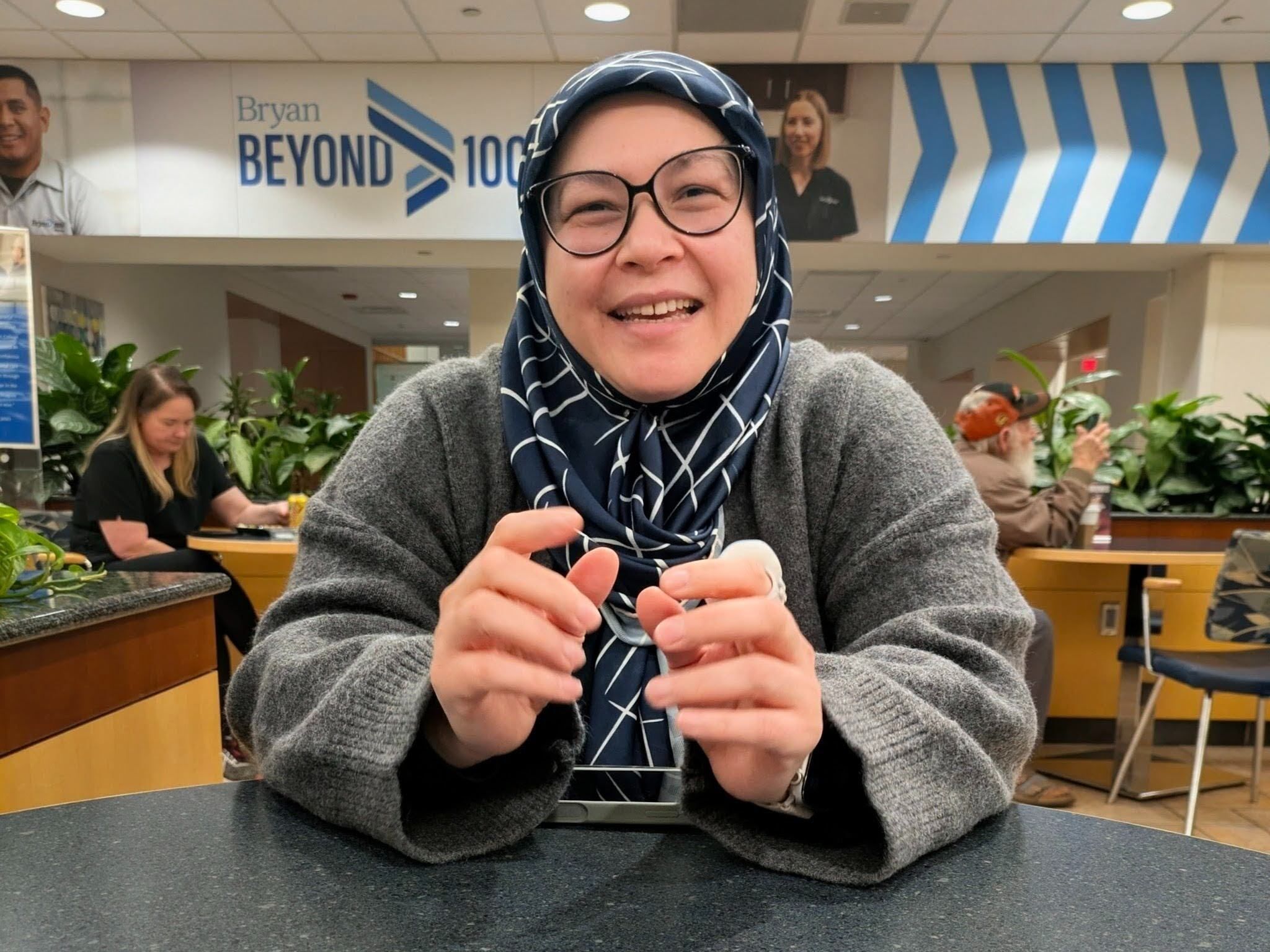
Pictured: Nigora talks on March 23, 2026, about how she completed her CNA preparation at Lincoln Literacy and her CNA class at Bryan College while she worked in Environmental Services at Bryan Medical Center. (Brittany Wren, Stingray Writing)
It was a busy day at Bryan Medical Center’s coffee shop counter. A cashier was taking orders, and non-slip shoes scuffed in the background. Sitting across a bistro table, Nigora quietly described her journey to the United States as a single mother and asylum-seeker from Tajikistan. She held a bachelor’s degree in international negotiations and possessed basic English skills, but the shift to American English felt like starting over.
“When I came to America, it was different to understand,” she said, because the English she had learned back home was British English.
Once she obtained work authorization, she worked in an entry-level food service job and later as an evening housekeeper at another hospital. Then she got a part-time job in Environmental Services at Bryan Medical Center. She was gaining experience in healthcare, but like many in her position, moving beyond entry-level roles required new skills, support, and opportunity.
The conversation stopped when a woman in a navy uniform approached. It was Dee Clark, the Environmental Services (EVS) supervisor who first hired Nigora years ago to clean patient rooms.
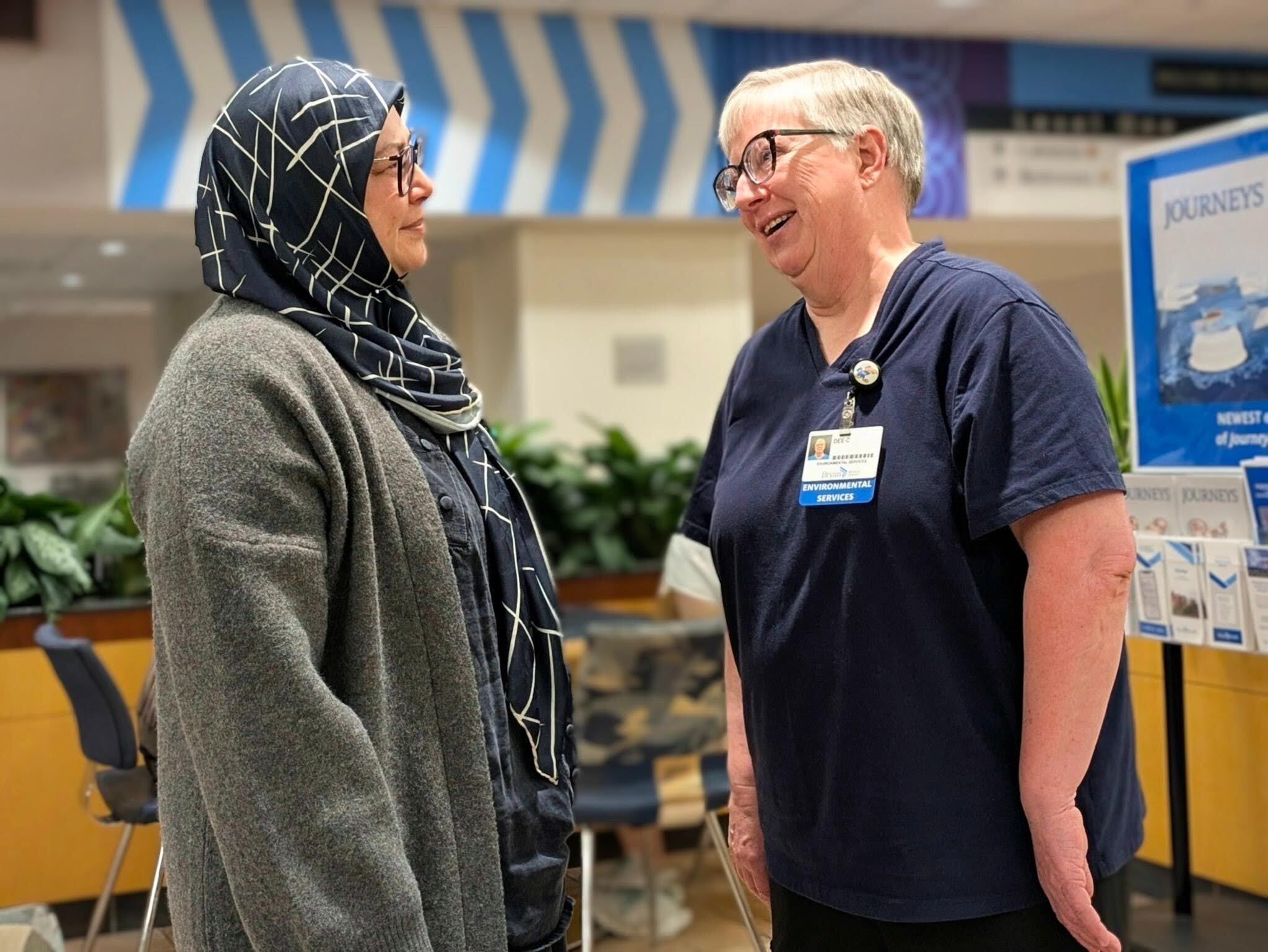
Pictured: Nigora, now a cardiac patient monitor, greets her former EVS supervisor, Dee Clark, at Bryan Medical Center East Campus, March 23, 2026. (Brittany Wren, Stingray Writing)
They greeted each other with hugs and the familiarity of friends. It was Dee Clark who first asked Nigora where she saw herself in five years and then introduced her to Lincoln Literacy.
In 2018, Nigora began taking Lincoln Literacy’s free basic English classes onsite at Bryan Medical Center, then began the pre-CNA classes in 2019. Both helped her build stronger English and medical terminology skills in preparation for her CNA certification at Bryan College of Health Sciences.
"When I came to America, Lincoln Literacy supported me," she said with emotion. “Sometimes I’m forgetting in difficult times the people who support us.”
With the medical terminology and English language skills from Lincoln Literacy, Nigora completed her Certified Nursing Assistant (CNA) class at Bryan College of Health Sciences on her first try. Then she received her state license and began a new job as a patient care technician in Bryan Medical Center’s pediatrics and neonatal intensive care unit.
Learn more about Nigora’s impact during the COVID-19 pandemic in this 2020 Lincoln Journal Star article and this 2021 video from the NAHCA Broadcasting Network.
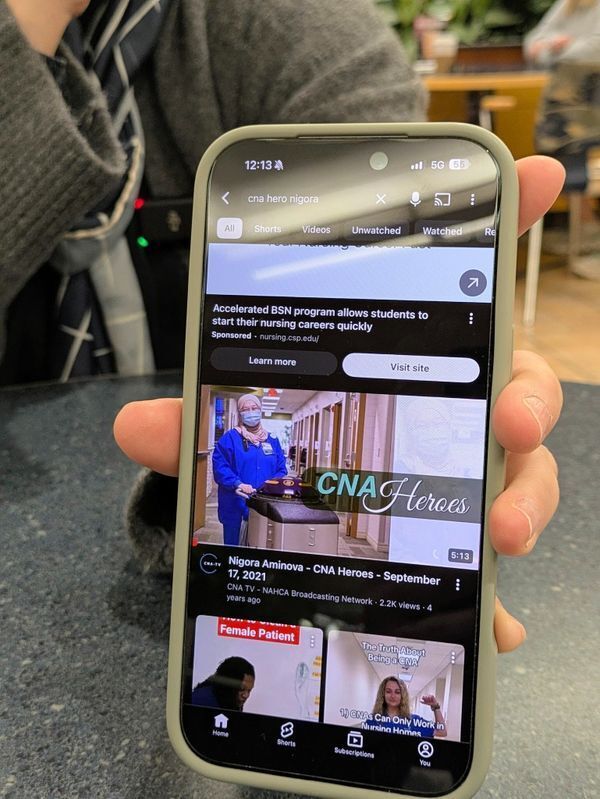
Pictured: Nigora shows the video made about her story by the NAHCA Broadcasting Network, based on the original reporting by the Lincoln Journal Star. March 23, 2026. (Brittany Wren, Stingray Writing)
“I really appreciate those years when I was a CNA,” Nigora said. “I’m proud that I was useful in difficult times.”
Today, she works in the Cardiac Monitoring Unit (CMU), spending her night shifts watching the heart rhythms of 40-50 patients.
“I like my team,” she said. “They call me CMU mom.”
A Record of American Education
For many new Americans like Nigora, the distance between an entry-level job and a medical career isn't measured in miles, but in "book language" and transcripts. The CNA Pathway program — a collaborative pipeline between Lincoln Literacy, Bryan Medical Center, and Bryan College of Health Sciences, with past and current support from the Community Health Endowment — was designed to dismantle those barriers. The Community Health Endowment (CHE) initiated the program in 2019 and continues to build partnerships like this by investing in innovative ideas and providing founding support to help them grow and take root in Lincoln.
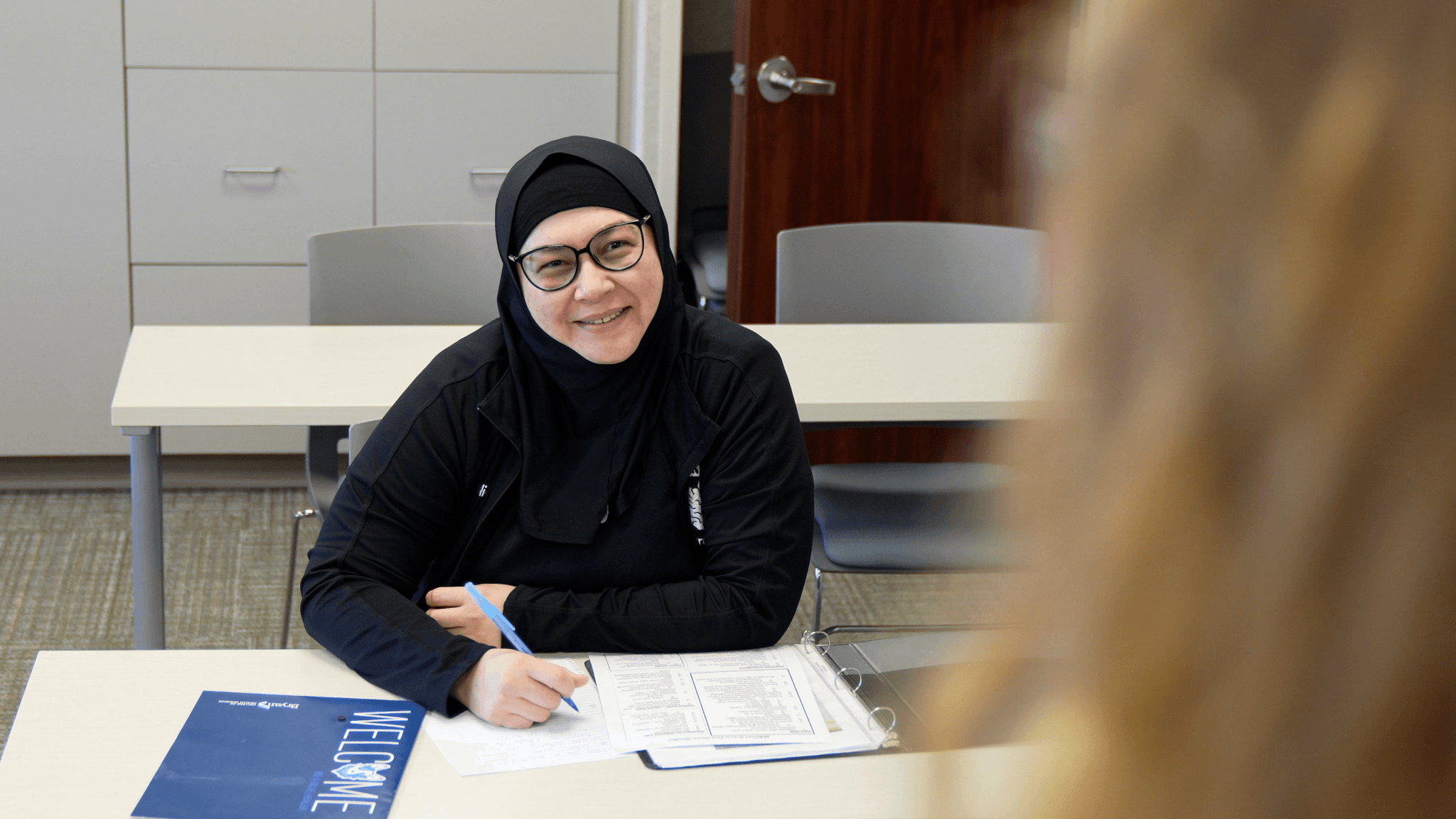
Pictured: Nigora in a Bryan College of Health Science’s classroom, April 20, 2026. (Melissa Fuller, LNKTV)
Behind partnerships like the CNA Pathway is a shared commitment to collaboration. CHE works to bring organizations together, connecting nonprofits, educators, and healthcare providers to build solutions that no single group could create alone. By supporting these partnerships, CHE helps turn community insight into lasting opportunity.
"Lincoln Literacy prepares students so they can be successful when they do take the CNA certification course," explained Julie, a Lincoln Literacy staff member. With a current $75,000 grant from the Community Health Endowment, the program strengthens English language skills and medical terminology.
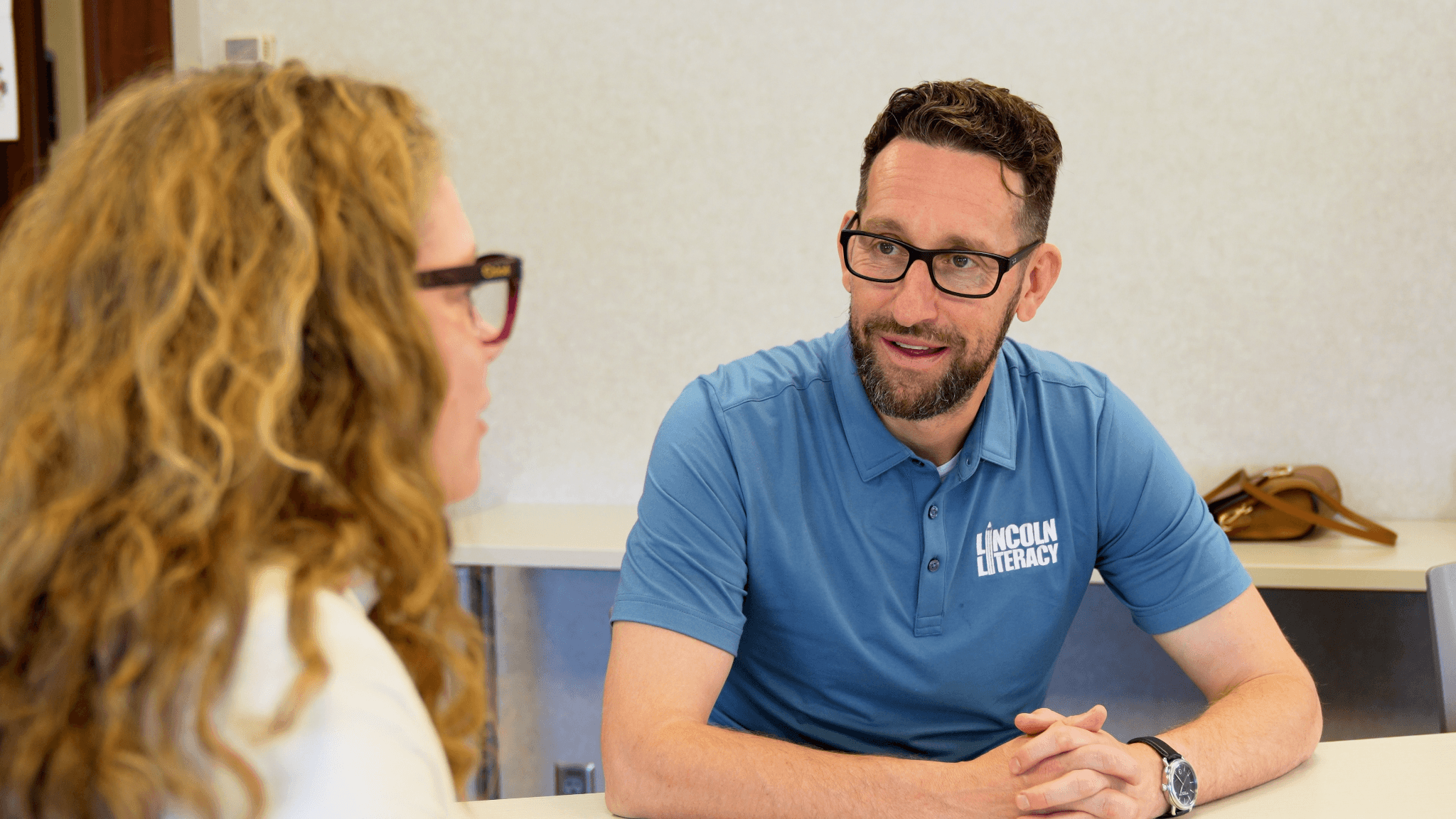
Pictured: Lincoln Literacy Executive Director Bryan Seck talks with Bryan College of Health Sciences President Kelsi Anderson in a college classroom, April 20, 2026. (Melissa Fuller, LNKTV)
Beyond vocabulary, the program helps participants establish what many higher-ed institutions call a "record of American education," a critical first credential in a new country and one they can earn at Bryan College of Health Sciences.
Beyond fulfilling their potential as patient-facing healthcare workers, the CNA Pathway program helps English language learners like Nigora secure full-time employment with financial security and benefits like health insurance, retirement, and an upward career trajectory if they choose.
From Sugar Lab to Mother and Baby Unit
Nigora joins countless others with a similar story.
Alla moved to Lincoln from Moldova. Back home, she had worked in a laboratory testing sugar quality, but in Lincoln, she spent 12 years in Environmental Services. "I felt my personality — I’m not just here just to be like environmental service," Alla says. "I like to help people.”
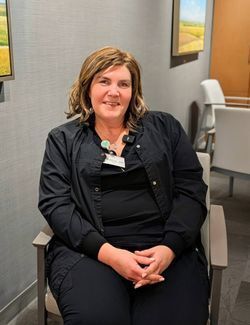
Pictured: Alla discusses on April 3, 2026, her work at a sugar factory in Moldova and her current role as a CNA at Bryan Medical Center East Campus, thanks to Lincoln Literacy’s pre-CNA class and Bryan College of Health Science’s CNA class. (Brittany Wren, Stingray Writing)
Like Nigora, Alla studied English and medical terminology in Lincoln Literacy’s pre-CNA class and later became a CNA and birth clerk at Bryan Medical Center. The CNA Pathway program gave Alla the "medicine words" to transition into the Mother and Baby unit as a patient care technician. She now spends her days helping prepare and print birth certificates and teaching new parents how to swaddle their newborns — a skill she once asked others to teach her.
"They just gave us a second chance," she said. "To reach our life goal."
Former Mechanical Engineer, Now Studying to Be a Nurse
A former mechanical engineer from Myanmar, Thuzar’s path to healthcare was forged in the intensive care unit (ICU) while caring for her father during his battle with cancer. Today, she is a CNA at Bryan East while pursuing her nursing degree at Southeast Community College. She credits Lincoln Literacy’s pre-CNA class for helping her get there.
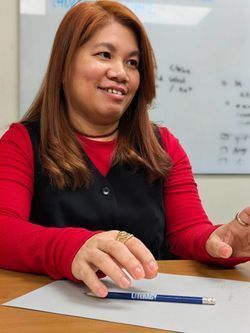
Pictured: Thuzar talks about how Lincoln Literacy’s pre-CNA class helped her gain her current role as a CNA at Bryan Health, March 11, 2026. (Brittany Wren, Stingray Writing)
Thuzar often finds herself bridging more than just medical gaps. She speaks Burmese and understands the frustration of being misunderstood. She has been known to draw pictures for elderly patients who cannot hear or understand her accent.
"Hey, you want ice water?" she’ll ask, sketching a glass of ice on a piece of paper she keeps in her pocket. "They understand. And I understand them."
Filling the Hospital’s Halls with Trained Professionals
This collaborative CNA pathway transforms lives by turning a job of survival into a professional trajectory. It begins at Lincoln Literacy, where students master "book English" and medical terminology. Students move from entry-level jobs to the rigors of state-certified CNA training. Through foundational funding from the Community Health Endowment, these students transition to Bryan College of Health Sciences, where they move from traditional classrooms into high-tech simulation rooms.
According to Bryan College of Health Sciences President Kelsi Anderson, these labs allow students to practice life-saving skills on high-fidelity mannequins that mimic real human distress — breathing, crying, and even reacting to medication — before they ever step onto a clinical floor.
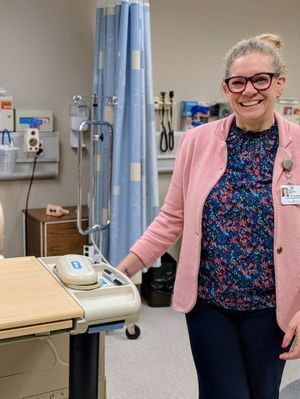
Pictured: Bryan College of Health Sciences President Kelsi Anderson shows a skills room used by Bryan students, April 1, 2026. (Brittany Wren, Stingray Writing)
This journey — from mastering a new language to navigating complex simulations — unlocks a trajectory of stackable credentials and state licensure that lead to future in-demand careers in healthcare.
Moving the Map
The ripple effects of these individual stories are seen across Lincoln’s health landscape. This isn't just a training course; it is a calculated investment in the city's future. Filling the city’s hospitals with multilingual healthcare professionals will improve health outcomes across cultures and develop Lincoln’s skilled workforce.
Valerie Hunt, executive director of the Bryan Foundation, noted that the hospital’s open positions have reached historic lows, down from a labor shortage during the early 2020s.
"We have never had our numbers for open positions lower than right now," Valerie said. By promoting from within and identifying talent in departments like EVS or laundry, the hospital is solving its labor shortage through loyalty, local expertise, and training programs like the CNA Pathway.
Kelsi Anderson, President of Bryan College of Health Sciences, noted that the program's impact doesn't stop with the individual student. At Bryan College of Health Sciences, the focus is on creating a sustainable, multi-generational shift in the workforce.
"We see the next generation coming up,” Kelsi said. “It’s really affecting generations by inviting people to engage in successful work in the healthcare community."
Besides partnering with Lincoln Literacy to train new Americans like Nigora, Alla, and Thuzar, Bryan College of Health Sciences also partners with Lincoln Northwest High School to offer the Medical Science Focus Program, which includes a 16-week Basic Nursing Assistant course for students aged 16 and above and 12 additional college credits toward any number of healthcare degrees.
Sustaining the Vision
Foundational funding from the Community Health Endowment (CHE) served as the catalyst for these partnerships. The success of this pipeline — moving neighbors from entry-level roles into vital healthcare careers — exemplifies CHE’s commitment to innovation and collaboration. By dismantling linguistic and financial barriers, the program honors community expertise, recognizing that the cultural and linguistic skills of Lincoln’s new Americans are essential to our city’s health.
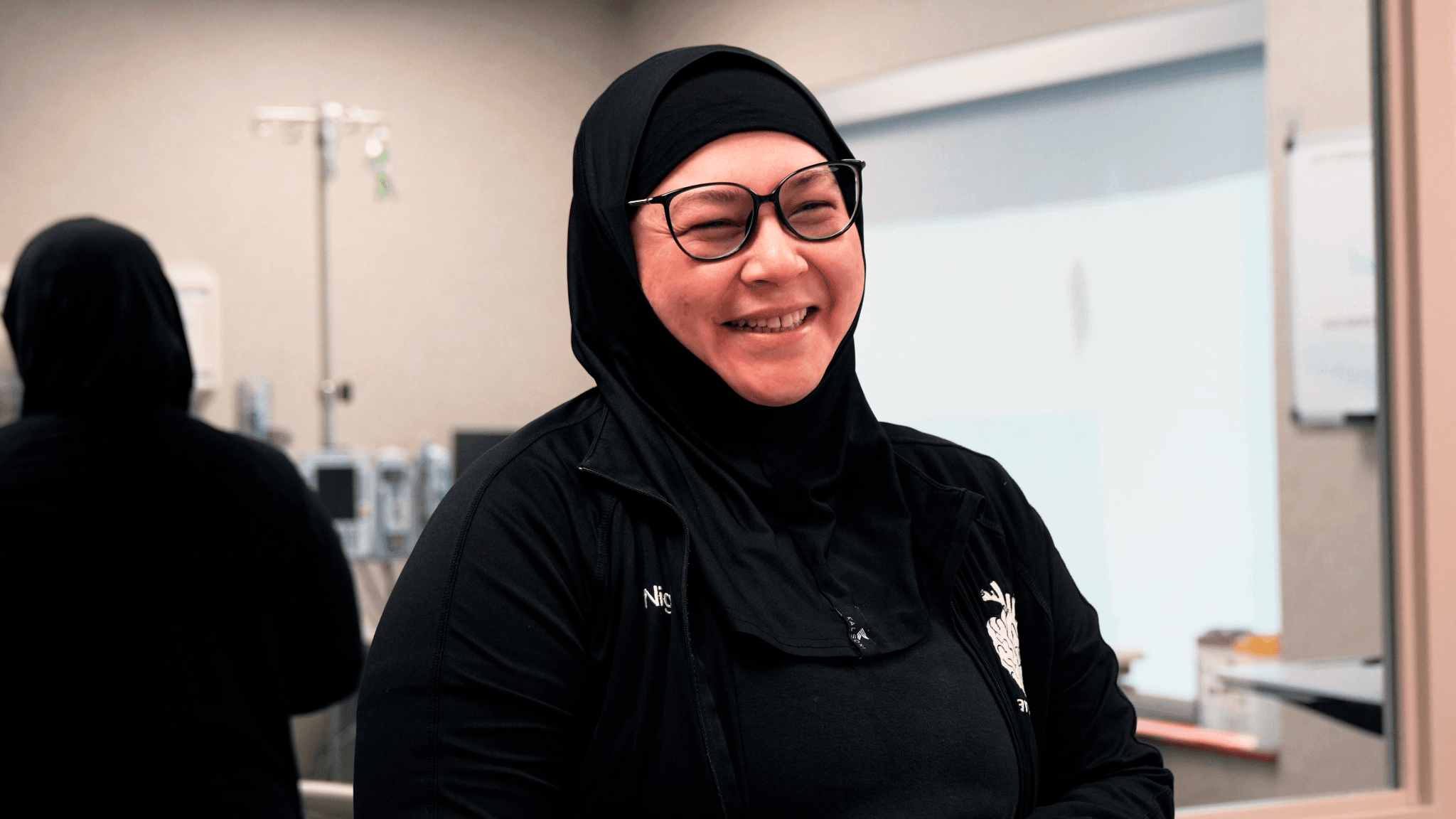
Pictured: Nigora in a College simulation room, April 20, 2026. (Melissa Fuller, LNKTV)
This data-informed approach is part of a larger effort to move the map toward equity. Place Matters 6.0 reveals that 70% of Lincoln census tracts with a higher-than-average minority population also experience higher-than-average poverty rates. By creating professional pathways in these specific areas, CHE and its partners are not just filling hospital vacancies; they are addressing the root causes of health disparities.
As CHE President and CEO Kate Bolz reflects:
"Place Matters is more than a report — it's a call to action. By making health data accessible and local, we help partners and neighborhoods design more effective and equitable solutions."
At the Community Health Endowment, our vision is to make Lincoln the healthiest community in the nation. Through these pathways, we are building a healthcare workforce that finally reflects the true face and heart of our community.