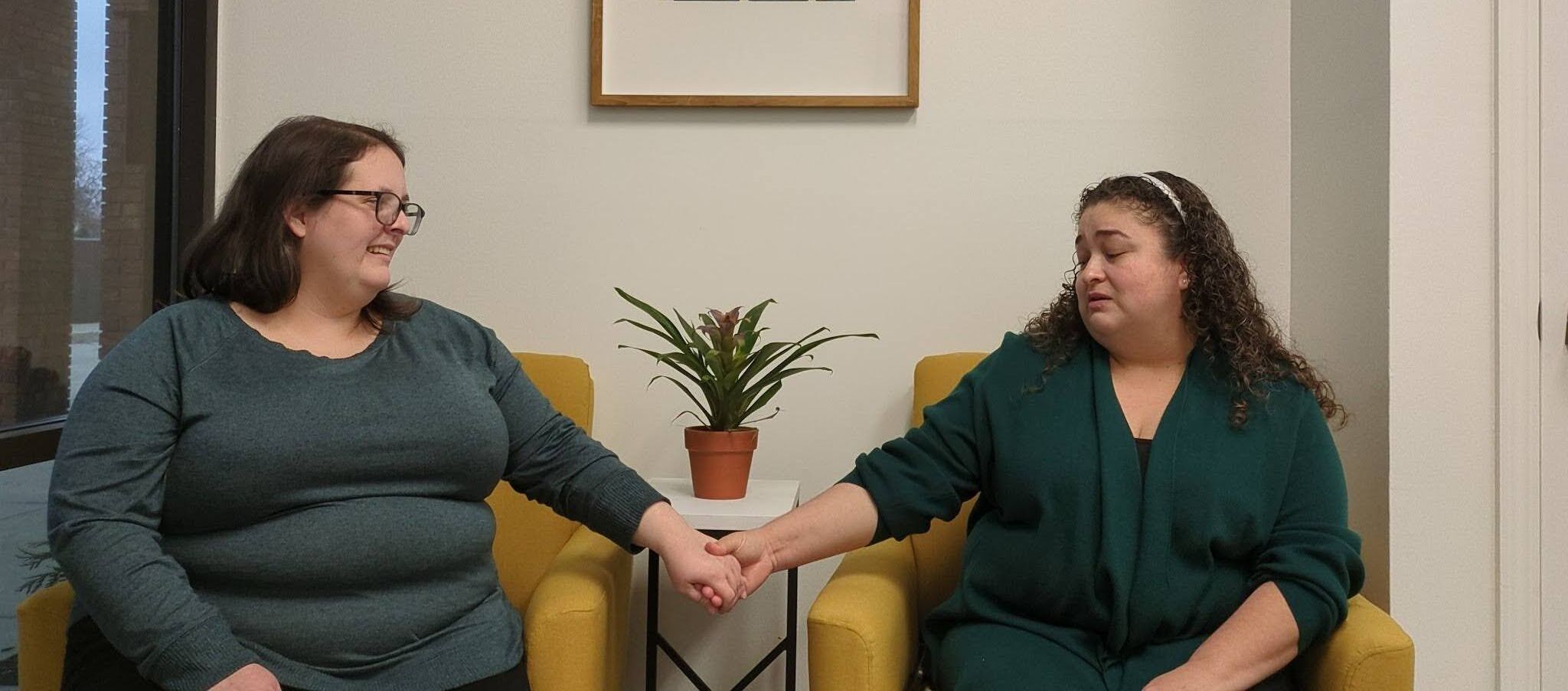
Pictured: Executive Director Mary Choate speaks with Alejandra about immigration challenges and the fear of talking to police on January 3, 2025, at the Center for Legal Immigration Assistance (CLIA). (Brittany Wren, Stingray Writing)
Imagine you are a parent who has just arrived in Lincoln. You’ve left behind everything you know to find safety, but the "good life" feels miles away. Every time you hear a siren or see a patrol car, your heart races — not because you’ve done something wrong, but because the fear of family separation is a constant, suffocating weight. You want to ask for help with the chronic stress and the memories of the journey you’ve endured, but you worry that speaking up might put a target on your back. So, you stay silent, navigating a complex new world while carrying an invisible burden of trauma.
For many of Lincoln’s newest neighbors, like Alejandra (pictured above), this limbo is a daily reality where mental health is often sacrificed for the sake of survival. The Center for Legal Immigration Assistance (CLIA), a finalist in the Community Health Endowment’s (CHE) Community Health Ideas Challenge, wants to change that narrative with its new Immigrant Mental Health Initiative.
A New Approach to Mental Healing
CLIA’s proposed Immigrant Mental Health Initiative recognizes that true health requires more than just legal status — it requires the peace of mind to thrive. Their plan moves beyond traditional clinical models by establishing a network of neighborhood wellness hubs in trusted, familiar locations like schools, cultural centers, and community centers like F Street Community Center, North Bottoms, Everett, and Central Lincoln. These hubs would provide:
- Bilingual Mental Health Screenings: Replacing standard Western frameworks with culturally adapted tools that allow residents to describe distress in their own language and traditional terms.
- Trauma-Informed Support Groups & Therapy: Offering safe spaces to process experiences like family separation and the unique psychological toll of the migration journey.
- Proactive Family Wellness Planning: A creative intervention where families work with school liaisons to designate emergency contacts and guardians, directly reducing the "fight-or-flight" stress caused by deportation threats.
CLIA’s Outreach Coordinator Paige Waite emphasizes that the initiative aims to create a supportive environment where residents feel safe enough to begin voicing their anxieties.
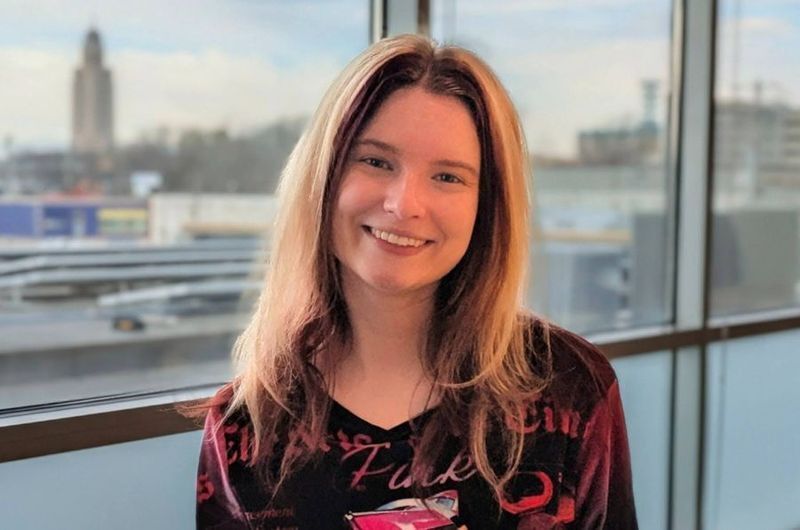
Pictured: Outreach Coordinator, Paige Waite discusses CLIA’s mental health initiative on April 10, 2026, at the Community Health Endowment of Lincoln. (Brittany Wren, Stingray Writing)
By providing a compassionate listener, the program helps individuals gradually “break down that toughness barrier,” she said, which has historically prevented them from seeking the care they deserve.
Standing in Solidarity: More Than Just an Idea
While the Immigrant Mental Health Initiative is a bold new vision, it is built on CLIA’s decades-long foundation of service. Since 2002, CLIA has been a lifeline for Lincoln’s immigrant and refugee populations, providing critical legal services that most residents could not otherwise afford. Their work includes:
Pathways to Citizenship: Assisting residents through the complex naturalization process.
Family Reunification: Helping families navigate the legal hurdles to stay together or bring loved ones to safety.
Protection for Survivors: Providing specialized legal aid for survivors of domestic violence and human trafficking through U-Visas and VAWA petitions.
"Know Your Rights" Education: Empowering neighbors with the knowledge they need to navigate the legal system with confidence.
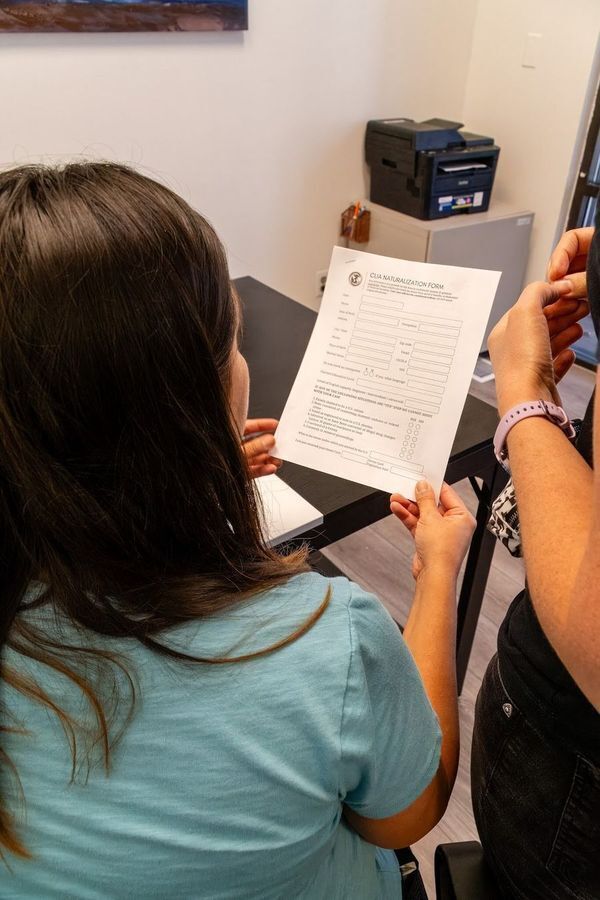
Pictured: Staff discusses the naturalization process for immigrants, July 11, 2024, at the Center for Legal Immigration Assistance (CLIA). (Charles Haacker)
Healing the Invisible Wounds of Our Neighbors
Lincoln is home to over 30,000 immigrants and refugees, representing roughly 10% of our population. CHE’s Place Matters 6.0 data maps the neighborhoods with greater ethnic diversity and highlights the intersection of poverty, social vulnerability, and health access. This data indicates that residents in these census tracts face elevated psychosocial stressors, yet many feel obligated to remain "invisible" and avoid seeking care due to trust barriers or the fear of appearing on a "radar."
Executive Director, Mary Choate believes mental health resources are vital to serve Lincoln’s large immigrant population. "We really want to keep immigrants and refugees involved in the community because they’re so integral,” Mary said. “But it’s been very difficult for them because they fear going outside of their homes."

Pictured: CLIA Executive Director, Mary Choate. (Courtesy Photo)
CLIA’s initiative addresses these social determinants of health head-on. By partnering with organizations like Lincoln Public Schools, Asian Community and Cultural Center, and Lutheran Family Services, the program would aim to transform mental health care from a reactive medical service into a proactive community standard that replaces silence and fear with stability.
Alejandra’s Journey Toward Peace
For clients like Alejandra, these mental health services are about much more than paperwork. They are about the right to live without fear. As a survivor of domestic violence, Alejandra came to CLIA at one of the most vulnerable moments of her life. Through their advocacy and expertise, she was able to secure her legal status, ensuring she could stay united with her children.
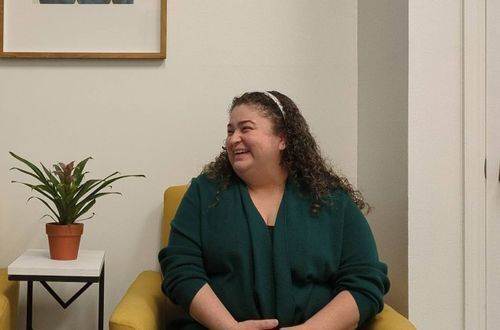
Pictured: Alejandra discusses her immigration case and her gratitude for the legal assistance and therapy program, January 3, 2025, at the Center for Legal Immigration Assistance (CLIA). (Brittany Wren, Stingray Writing)
“They were my angels,” Alejandra says of the CLIA team. “They helped me feel better in this country.”
How the Ideas Challenge Fuels Innovation
The Community Health Ideas Challenge was designed by CHE to give local nonprofits an avenue to think outside the box. Stay tuned as we continue to feature our Ideas Challenge finalists!
Learn more about CLIA’s programs at clianeb.org. For more information on the Community Health Ideas Challenge, visit healthideaschallenge.org.