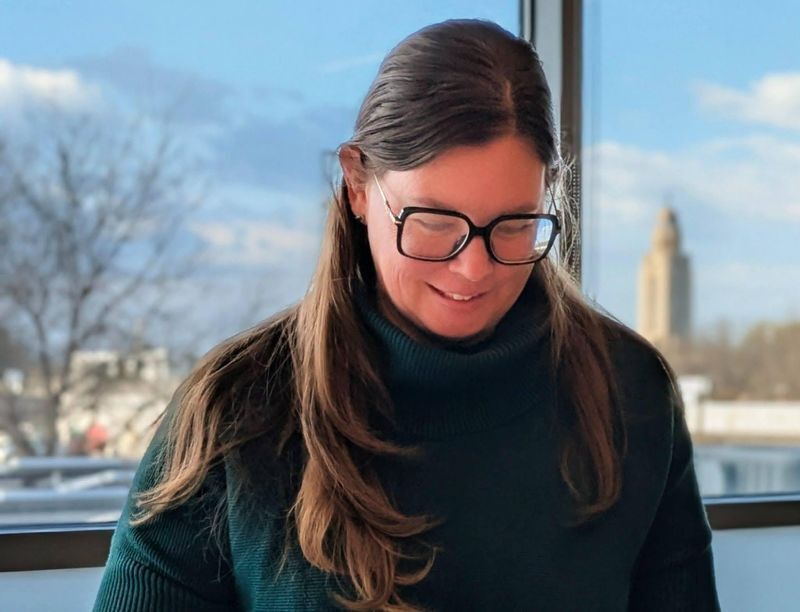
Pictured: The HUB Executive Director Rose Hood-Buss talks about the Guaranteed Cosigner Program at the Community Health Endowment, April 9, 2026. (Brittany Wren, Stingray Writing)
Imagine being 19 years old, freshly transitioned out of the foster care system, and ready to start your life. You have a job and a steady income, but every time you apply for an apartment, you hear the same word:
Denied.
The reason? You don’t have a credit history, you’ve never rented before, and you don’t have a family member to serve as a cosigner. For many young adults aging out of foster care in Lincoln, this structural barrier is the difference between a stable home and homelessness.
"It’s really hard to look into the face of a 19-year-old who has already experienced adversity and say, 'I'm sorry, the only option is the mission,'" says Rose Hood-Buss, Executive Director of The HUB Central Access Point for Young Adults. "When that happens, it feels like we’ve failed them."
A Foundation for Health
The HUB, a Lincoln-based nonprofit, provides unconditional support to "unconnected" young adults — those who are pregnant or parenting, exiting the child welfare system, or experiencing homelessness.
For young adults aging out of the foster care system, the transition to independence is often met with a harsh reality: a "no-man's land" where they are expected to be adults without the safety net most peers take for granted. In Nebraska, approximately 179 youth age out of the system annually without a permanent family placement, leaving them to navigate complex systems entirely on their own.
While the HUB’s mission focuses on education, employment, and empowerment, Rose realized that without stable housing, those goals are nearly impossible to reach.
“Housing is a foundational piece of health.”
- Rose Hood-Buss
"Housing is a foundational piece to health," Hood Buss explains. "When you aren't constantly operating in 'fight or flight' just trying to figure out where you’re sleeping, you can make decisions from a different place."
Stable housing allows young adults to:
Support Mental Wellness: Reduced stress and fewer crisis-driven decisions.
Improve Physical Health: Consistent sleep and a safe space to store and prepare nutritious food.
Build Personal Responsibility: A private space to maintain hygiene and daily routines.
The Structural Wall
Rose highlights that these young adults are frequently "unconnected," meaning they lack the traditional support systems required to meet modern housing standards. Even with a steady job and income, they face a cycle of rejection from landlords due to three primary missing pieces:
No Credit History: Many have never had a credit card or loan in their name, or worse, have had their identity compromised by others.
No Rental History: Since they are just turning 19 and leaving the system, they lack the references landlords use to gauge risk.
No Cosigner: They do not have a family member with established credit willing to legally back their lease.
This combination of factors means that for many, the only "plan" offered upon leaving foster care is moving into a homeless shelter.
Breaking the Cycle of Homelessness
The data underscores the urgency of The HUB's mission. According to the Nebraska Foster Care Review Office December 2025 Quarterly Report:
- 33% of young adults currently experiencing homelessness in the community have a history in the foster care system.
- 25% of youth who age out of foster care will experience homelessness within just four years.
The Idea: A Community Cosigner
To bridge this gap, The HUB developed the Guaranteed Cosigner Program, a finalist in the Community Health Ideas Challenge. The concept is simple yet innovative: The HUB serves as the financial guarantor for a young adult’s lease, backed by a dedicated guarantee fund.
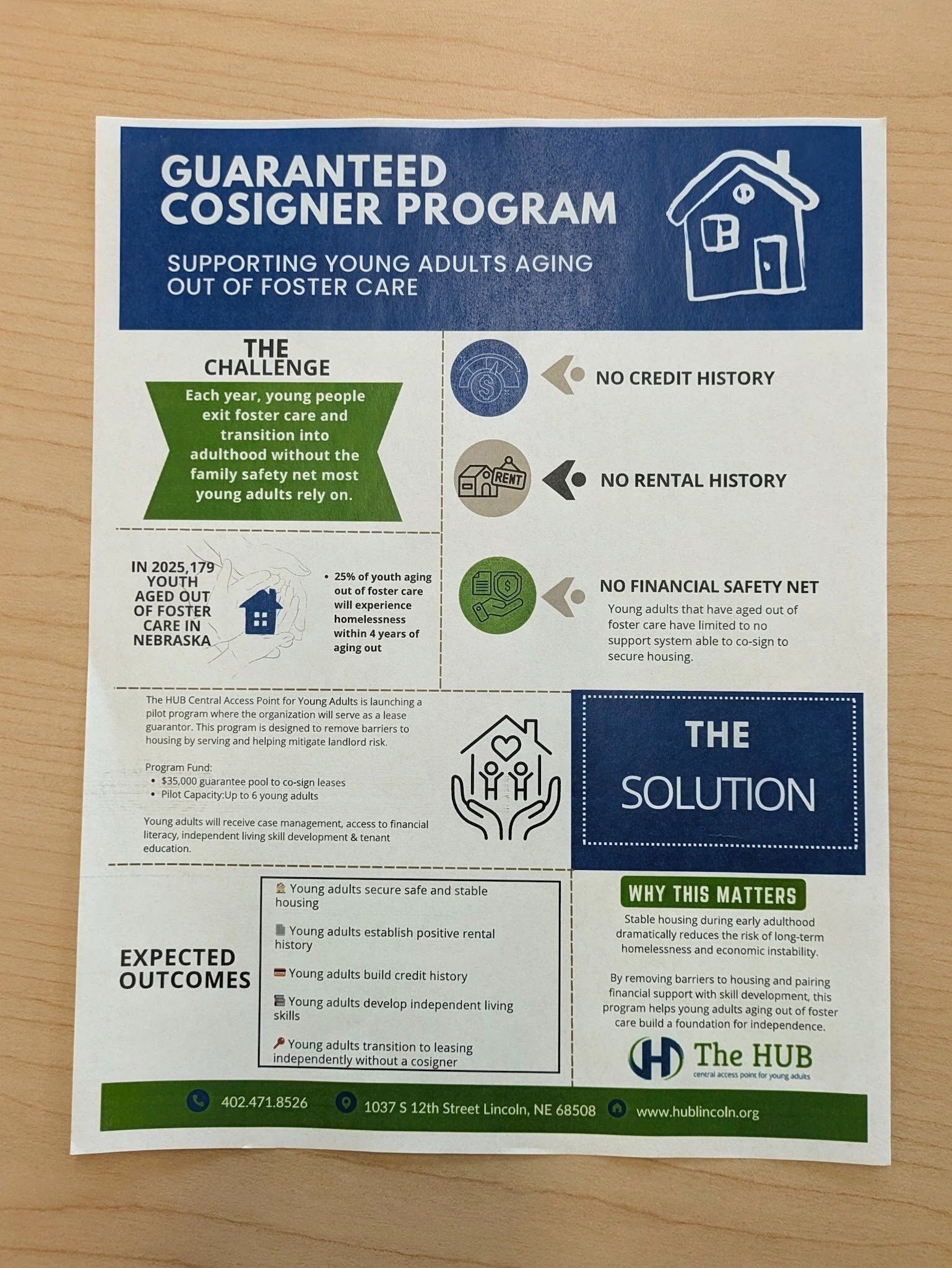
Pictured: The HUB Central Access Point for Young Adults proposes starting a Guaranteed Cosigner Program. (Brittany Wren, Stingray Writing)
This isn't a rental subsidy or a voucher program. The young adults pay their own rent using their income or stipends from programs like Bridges to Independence. The HUB’s role is to mitigate the landlord’s risk while providing the tenant with:
Financial Literacy: Budgeting and fiscal management skills.
Tenant Education: Understanding the responsibilities of being a leaseholder.
Case Management: Ongoing support to navigate life's "bumps," such as car repairs or medical emergencies.
"The goal is not to spend the money," says Hood Buss. "We want them successfully housed. But we need those dollars to sit there so the landlord will hand over the key."
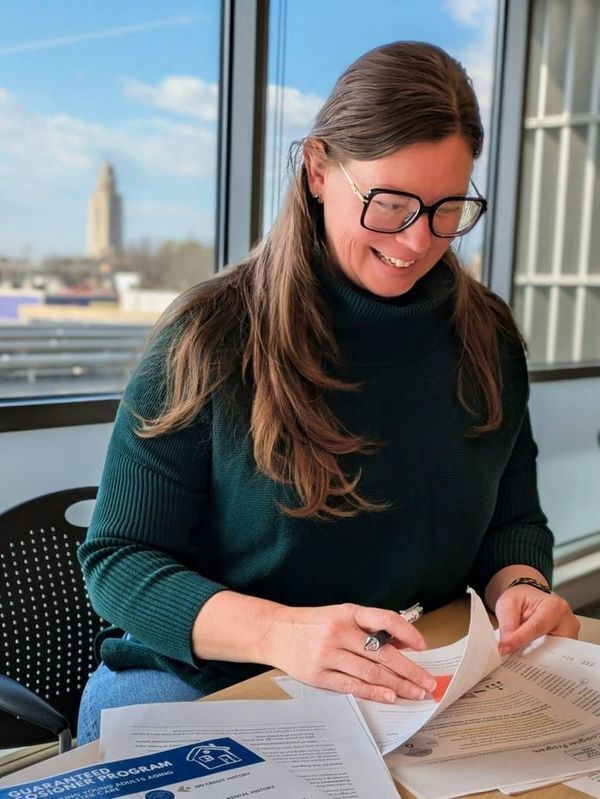
Pictured: The HUB Executive Director Rose Hood-Buss talks about the Guaranteed Cosigner Program at the Community Health Endowment, April 9, 2026. (Brittany Wren, Stingray Writing)
Housing as Healthcare
By addressing housing for this specific population, The HUB is directly intervening in their long-term health trajectory. Stable housing serves as a foundation that prevents "chronic status" — a state in which an individual has been unhoused for 12 months or more.
When these young adults secure a home through the Guaranteed Cosigner Program, they gain more than just a roof; they gain the stability needed to store fresh food in a refrigerator, maintain personal hygiene for work, and exit the "fight or flight" mode that causes chronic cortisol-driven stress.
"We've recognized a problem. Here's how our organization, our community, and our young people can be taken care of. It takes something outside of the box to meet all the needs."
— Rose Hood Buss
Proving the Concept
The program has already gained momentum, with Union Bank & Trust (UBT) partnering to hold the fund and provide guarantee letters to landlords. Currently, five local landlords have signed on to participate in the pilot phase, which aims to support six young adults.
As the young adults successfully complete their first lease, they build the rental and credit history needed to transition to independent leasing without a cosigner in the future.
A Call to Innovation
The HUB’s Guaranteed Cosigner Program is a prime example of a local solution addressing a long-standing community gap. As CHE President & CEO Kate Bolz puts it, the Community Health Ideas Challenge is about giving our partners "permission to dream and to think outside the box."
Stay tuned as we continue to feature our Ideas Challenge finalists!
To learn more about the daily mission and the Guaranteed Cosigner Program, visit hublincoln.org. For more information on the Community Health Ideas Challenge, visit healthideaschallenge.org