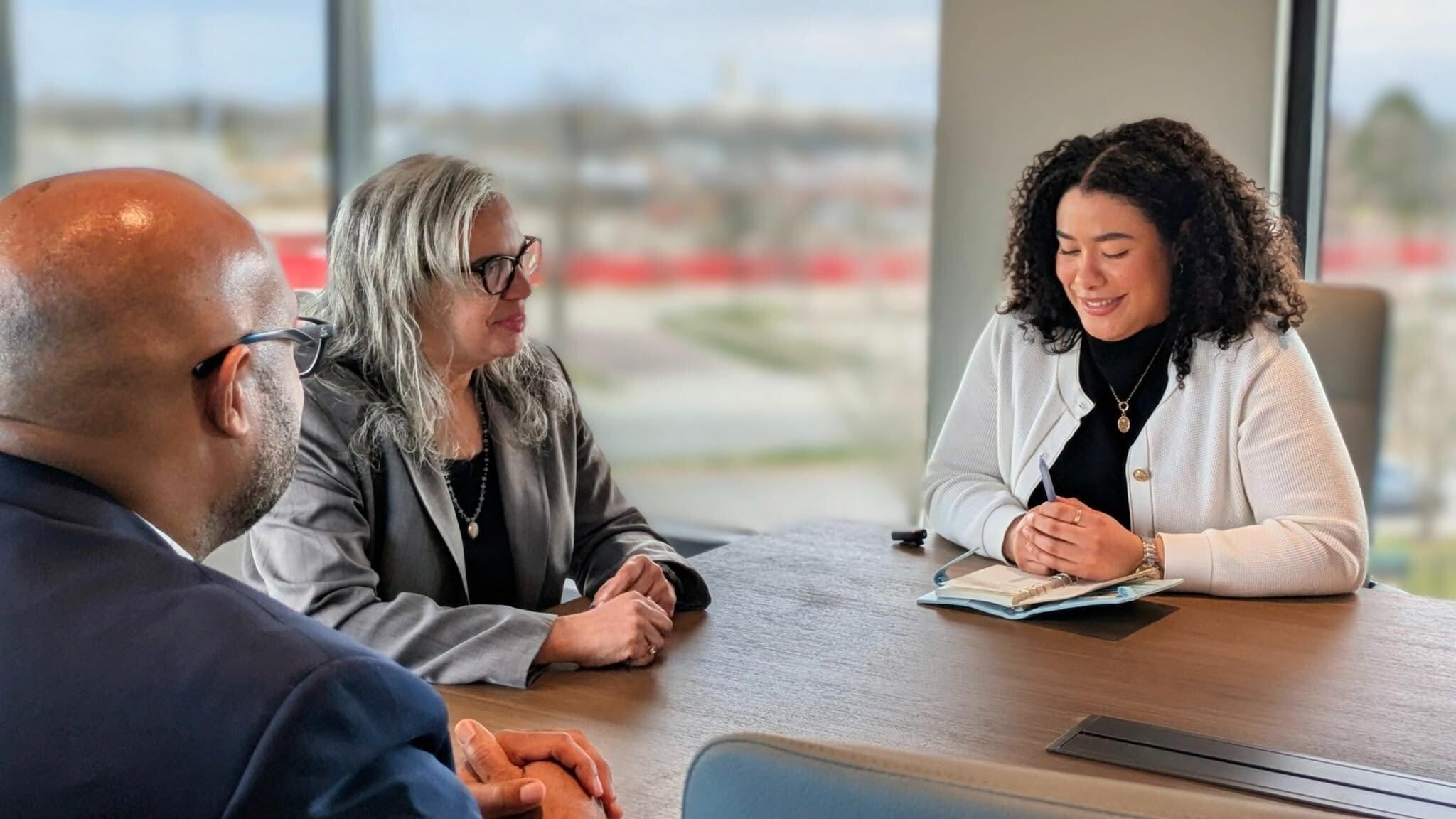
Pictured: Malone Community Center Executive Director Shannon Martin-Roebuck talks with Director of Health and Healing Erica Craig on April 9, 2026. (Brittany Wren, Stingray Writing)
Since 1955, the Clyde Malone Community Center’s mission has always been clear: to eliminate multi-generational poverty and create pathways to prosperity. Today, as it nears the completion of a major facility renovation, the Center is stepping forward with a bold vision to address one of the city's most pressing health disparities: the 10-year gap in life expectancy between Lincoln’s wealthiest and most impoverished neighborhoods.
But prosperity is impossible without physical health, according to Executive Director Shannon Martin-Roebuck.
That is why the Malone Center stepped forward as the runner-up in the Community Health Ideas Challenge with a bold, creative concept: the One-Stop Cancer Shop.
Bringing Care to the Neighborhood
The One-Stop Cancer Shop shifts cancer screenings from intimidating clinical settings into trusted neighborhood hubs. Instead of asking residents to navigate complex systems, the Malone Center will bring the services directly to them.
The project is scheduled for August 28, 2026, through partnerships with Bryan Health, the Lincoln-Lancaster County Health Department, Mount Zion Church, and the Cultural Centers of Lincoln Collaborative. It will offer:
Comprehensive Screenings: Free or low-cost screenings for the top four cancers (breast, lung, colorectal, and prostate), alongside checks for blood pressure, diabetes, and mental health.
No-Cost Care: Services are free or low-cost, ensuring that insurance status is not a barrier to entry.
Patient Navigation: Community navigators and cultural brokers will walk alongside residents, helping them understand results and connecting them to follow-up care so they aren't "left high and dry."
Logistical Support: Transportation to the event and assistance with insurance enrollment will be provided.
A Personal Mission
For the Malone Center staff, this initiative is more than a program — it is a tribute. The idea was galvanized by the loss of a beloved team member to cancer, a tragedy that underscored the high stakes of early detection.

Pictured: Malone Center Director of Health and Healing Erica Craig speaks with emotion about the necessity of the One-Stop Cancer Shop on April 9, 2026. (Brittany Wren, Stingray Writing)
“We want our people to be here. We don't want to lose any more of our family,” Erica said with emotion. “This project is about giving our community the chance to catch things while there’s still time to do something about it — because we know exactly what it feels like when that time runs out.”
By bringing life-saving care directly to the Center, they are honoring their colleague’s memory and ensuring neighbors catch illnesses early.
A Solution Born from the Community
The Malone Center’s idea is grounded in the sobering realities of the Place Matters project. In census tracts immediately surrounding the Center, where poverty is at or above 30%, life expectancy averages 74 years (with the lowest being 69 years), compared to 81 years in tracts where poverty is at or below 5%.
By shifting screenings from traditional clinics to the Malone Center gym — spaces where families already gather for athletics and childcare — the program aims to reach 300 residents annually and conduct up to 150 screenings each year.
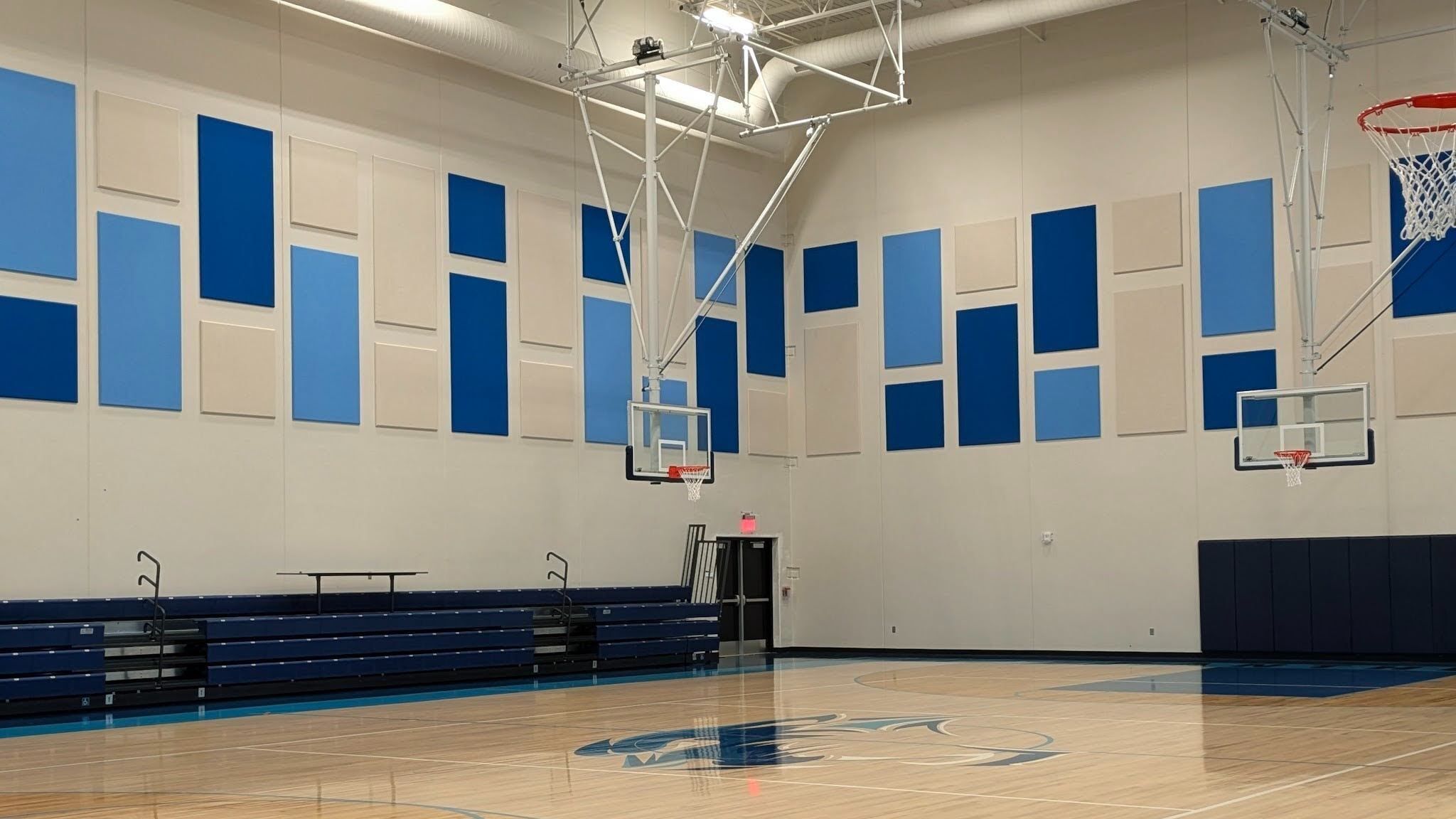
Pictured: The Malone Community Center’s newly renovated gym will host the One-Stop Cancer Shop in August, 2026. (Brittany Wren, Stingray Writing)
A Pillar of Holistic Wellness
The Malone Center is uniquely positioned to host this initiative because it is already an essential part of daily life for Lincoln families. For families who already visit the center for athletics, preschool, or maternal wellness support, receiving a life-saving screening in the same building where their children play basketball reduces the psychological and physical barriers to care.
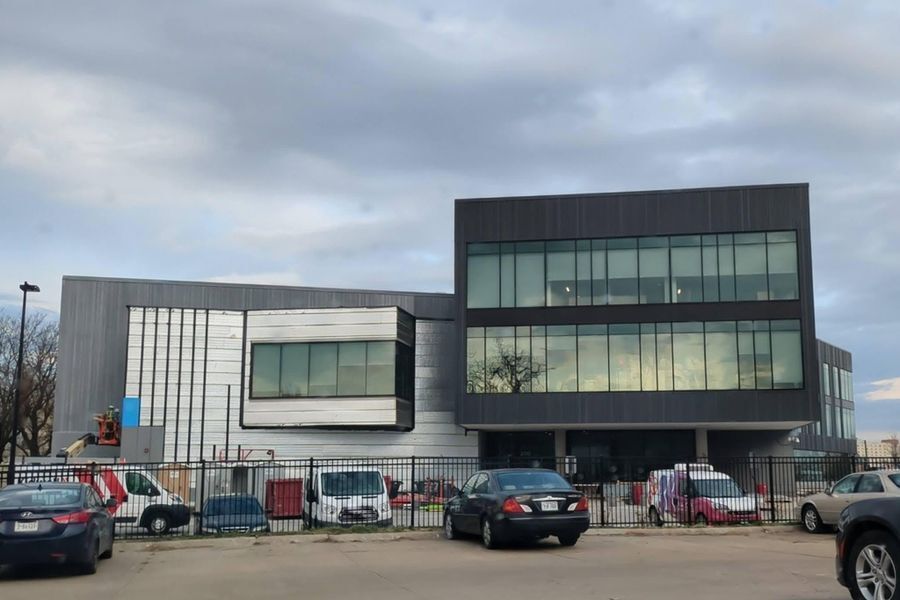
Pictured: The Malone Community Center’s new building will host the One-Stop Cancer Shop in August, 2026. (Brittany Wren, Stingray Writing)
The Malone Center’s work spans four vital pillars:
Education: From the Early Achievers Academy to the Culler and Northeast Community Learning Centers, they provide a "cradle-to-career" pipeline for Lincoln's youth.
Wellness: Programs like Maternal Wellness and the Malone Milkshare work specifically to reduce health disparities for mothers and infants.
Athletics: The Malone Panthers programs use sports to build character, literacy, and a sense of belonging.
Advocacy: From restorative wellness builders to collaborative initiatives like Take Pause, they are a first responder for families in need.
Pictured: The Malone Community Center already offers integrative health and healing programs, like maternal wellness and coaching. (Brittany Wren, Stingray Writing)
Transforming Trust into Health
The "One-Stop Cancer Shop" model recognizes that medical mistrust and logistical hurdles often delay early detection. By leveraging the Center’s decades of deep community relationships, the Malone Center is transforming trust into a pathway for early detection and improved health equity.
"Knowledge is key in understanding things before they happen so that we can know what’s coming," says Shannon. "We’re just here trying to help the Lincoln community and have fewer health disparities."
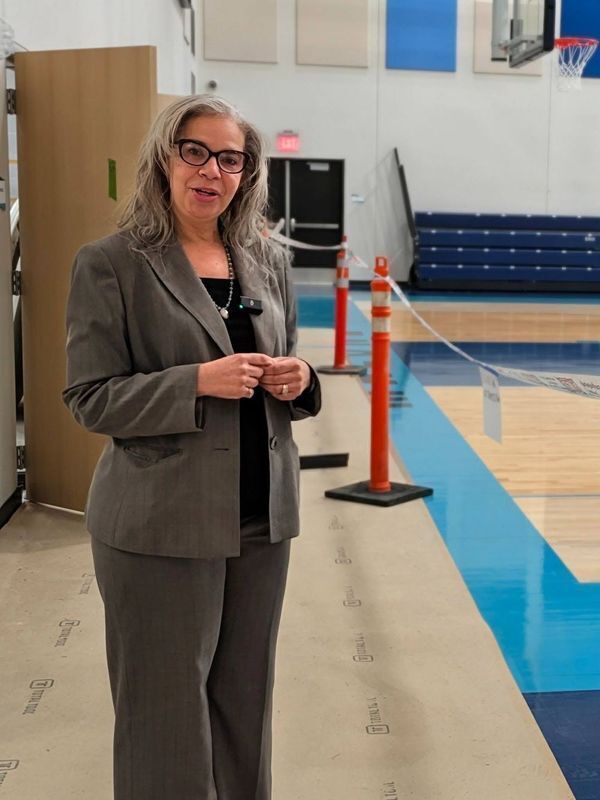
Pictured: Malone Community Center Executive Director Shannon Martin-Roebuck talks about the One-Stop Cancer Shop in the Malone Center’s gym on April 9, 2026. (Brittany Wren, Stingray Writing)
By integrating life-saving screenings into a space residents already trust, the Malone Center is transforming community relationships into pathways for health equity.
How the Ideas Challenge Fuels Innovation
The Community Health Ideas Challenge was designed by CHE to give local nonprofits the "permission to dream" and think outside the box. By supporting the Malone Center’s place-based approach, the Endowment is helping transform community relationships into pathways for early detection and health equity.
Stay tuned as we continue to feature our Ideas Challenge finalists!
Learn more about the Malone Center’s programs at malonecenter.org. For more information on the Community Health Ideas Challenge and other CHE initiatives, visit chelincoln.org.