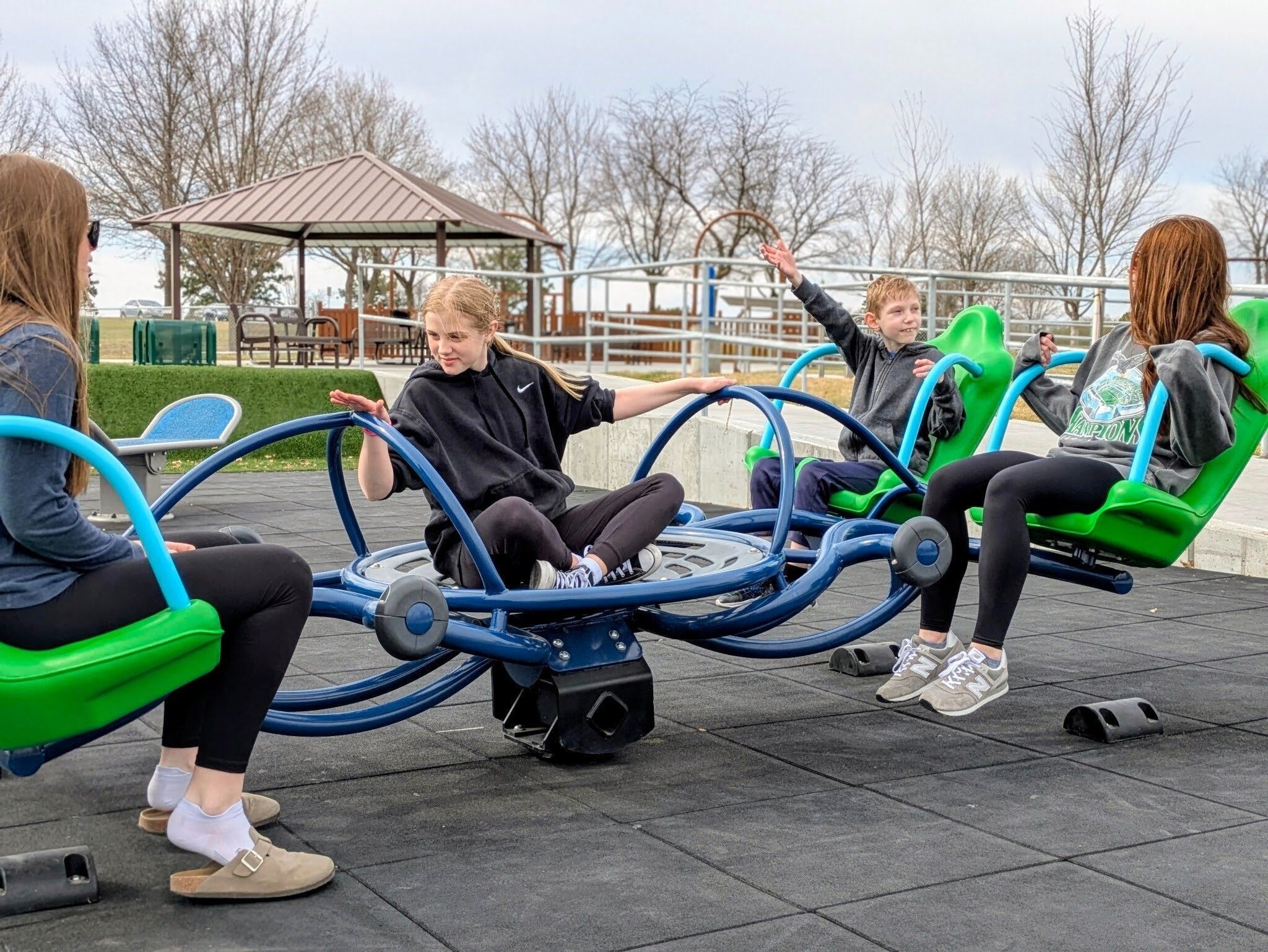
Pictured: Denise Klein and her three children play at Mahoney Inclusive Playground, March 29, 2026. (Brittany Wren, Stingray Writing)
It feels like any other Lincoln afternoon — shrieks of delight from the slides, parents squinting against the Nebraska sun. But look closer, and you’ll see that the barriers that once limited play have been thoughtfully removed at Mahoney Inclusive Playground.
For Denise Klein, a middle school social worker and single mother of three, this isn’t just a park — it's a physical and emotional relief.
Her eight-year-old son, Cooper, has autism and intellectual delays. While Cooper is naturally happy, typical parks often pose significant sensory and safety challenges, turning family outings into high-stakes missions of vigilance.
When he’s overwhelmed or overstimulated, Cooper tends to run away, and Denise has navigated the constant fear of this elopement for years. In an open, unfenced park, a split-second distraction could turn into a crisis.
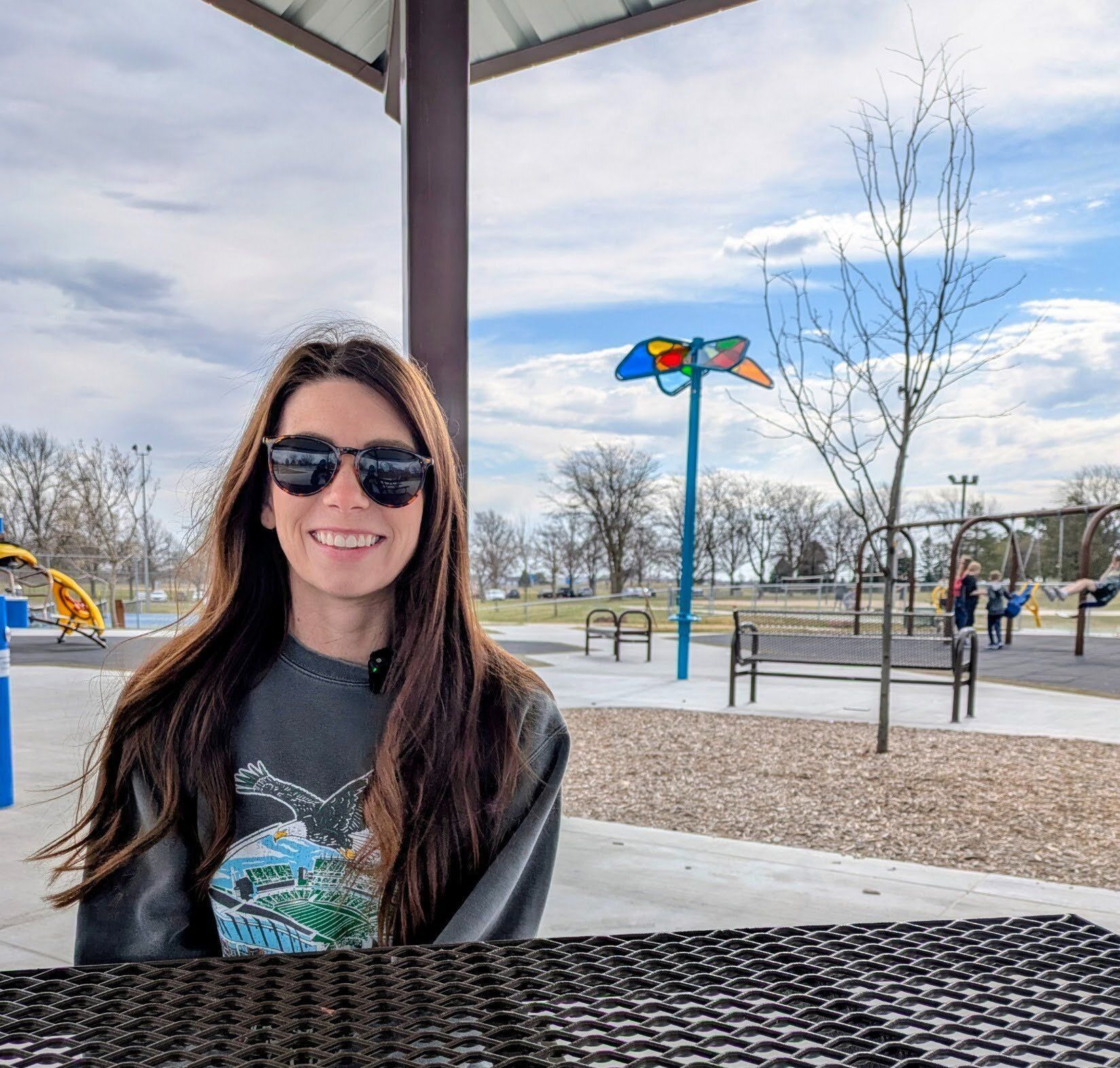
Pictured: Denise Klein discusses her children’s sensory and physical needs at Mahoney Inclusive Playground, March 29, 2026. (Brittany Wren, Stingray Writing)
Designed with Heart and Science
The physical design of the Mahoney playground directly addresses Denise’s fears. Here, the "regular" experience of play is no longer a privilege of the able-bodied. It is a 34,000-square-foot sanctuary where children in wheelchairs spin on ground-level merry-go-rounds and sensory-sensitive kids find refuge in dedicated quiet zones.
"The fence is a huge piece of it," Denise noted. But it’s also the subtle details, like the serpentine entrance that prevents a child from having a straight shot to the parking lot. These features allow Denise to finally sit on a bench and watch all three of her kids play together without the fight-or-flight response that usually accompanies a trip to the park.
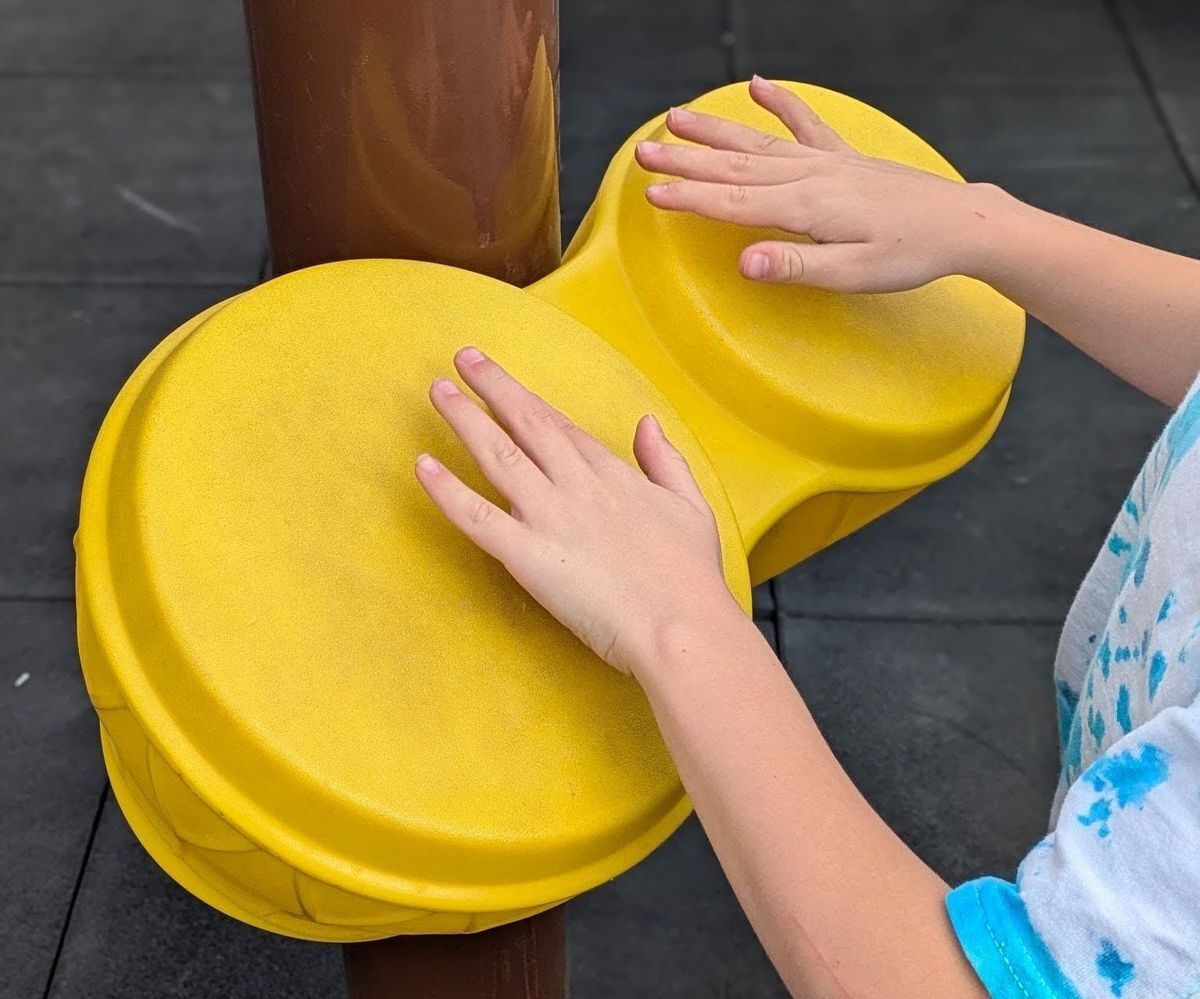
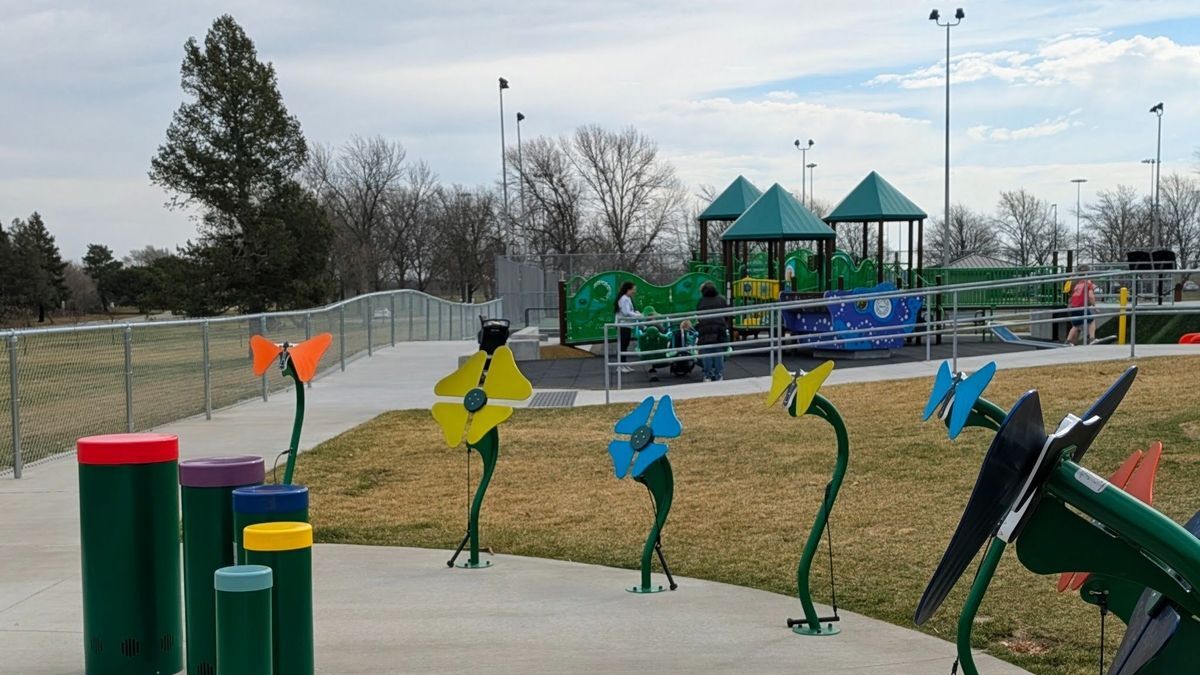
Inside the playground, vibrant butterfly shapes chime in the music zone, and bright yellow bongos wait for a child’s touch. Even the ground itself is intentional. Synthetic turf, rubber tiles, and poured-in-place surfaces form a safe landing in case of falls. A band of yellow around the main play zones visually queues users that they are entering a new play experience.
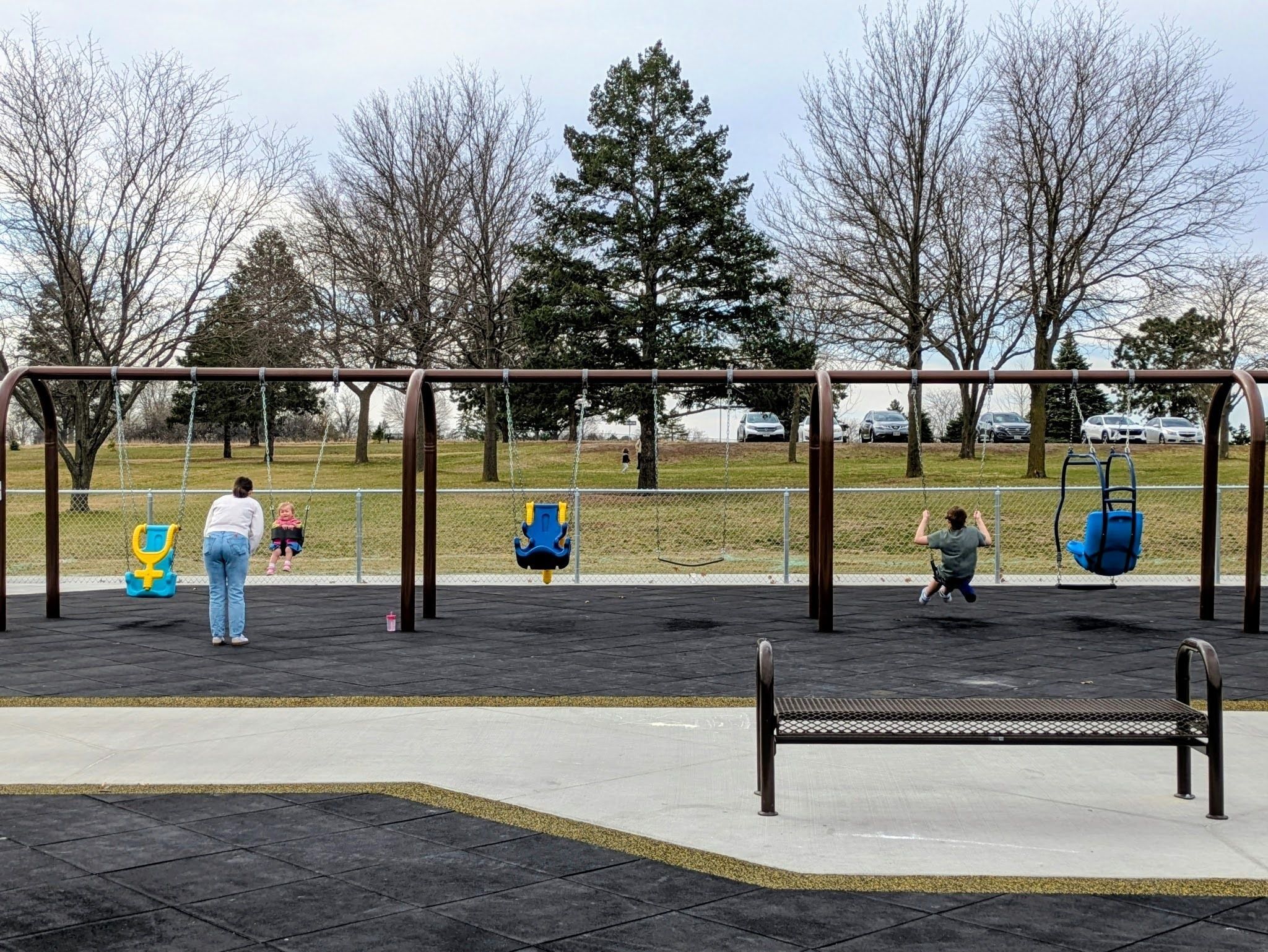
Pictured: The swing zone is designed for side-by-side play, featuring supportive bucket swings that ensure children with physical disabilities can soar alongside their siblings and friends at Mahoney Inclusive Playground, March 29, 2026. (Brittany Wren, Stingray Writing)
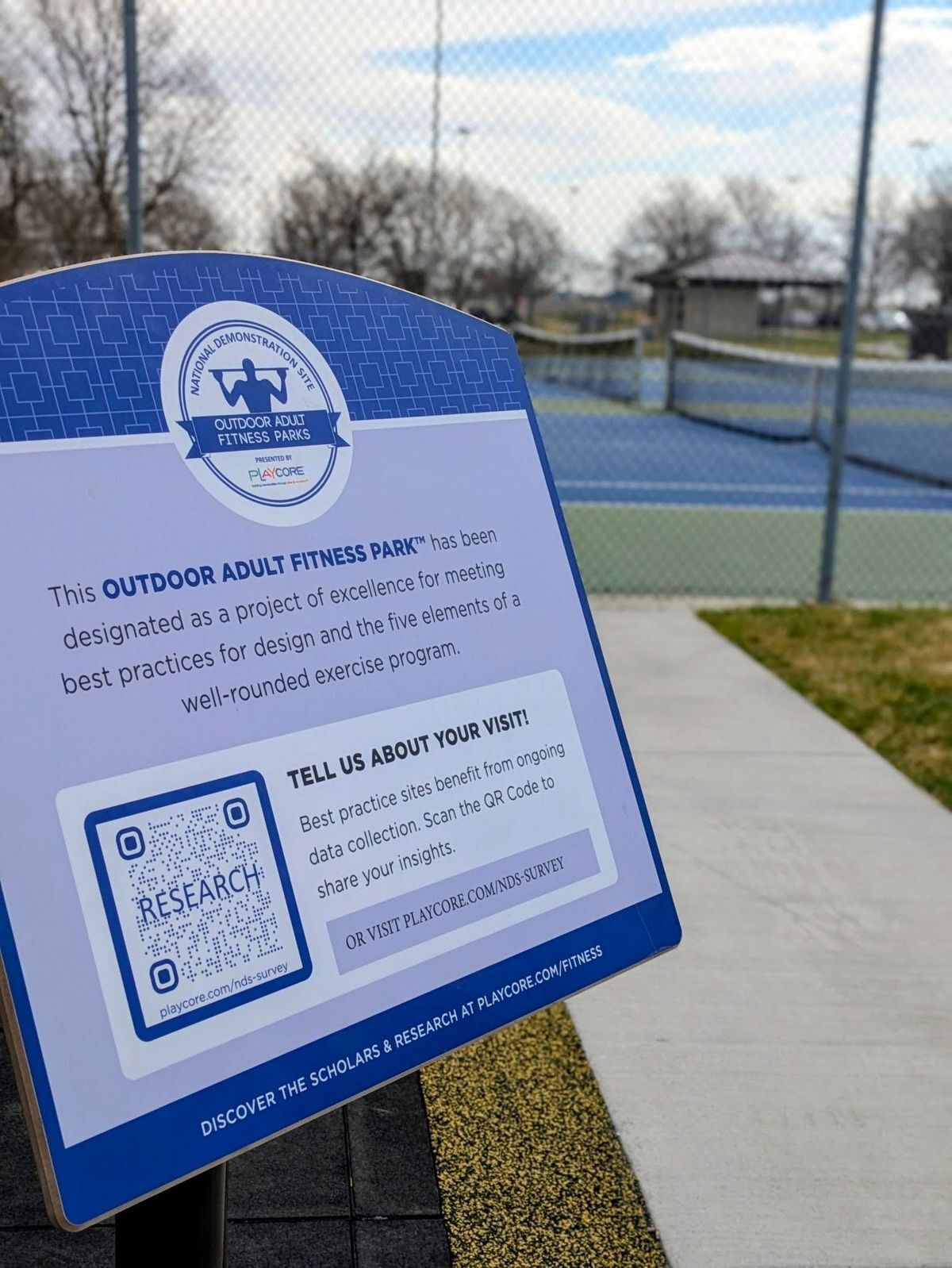
The Mahoney Inclusive Playground is five times the size of the facility it replaced and serves as a national model for inclusive design. Recognized as a PlayCore National Demonstration Site, the park uses Inclusive Playground Design and Play On! best practices to ensure people of all ages and abilities can play, learn, and connect.
Key playground features include:
- Safety and Security: A perimeter fence and serpentine entrance prevent children from bolting toward the parking lot, providing peace of mind for parents like Denise.
- True Inclusion: The design goes beyond accessibility to promote physical and social inclusion for diverse sensory, cognitive, and social-emotional needs.
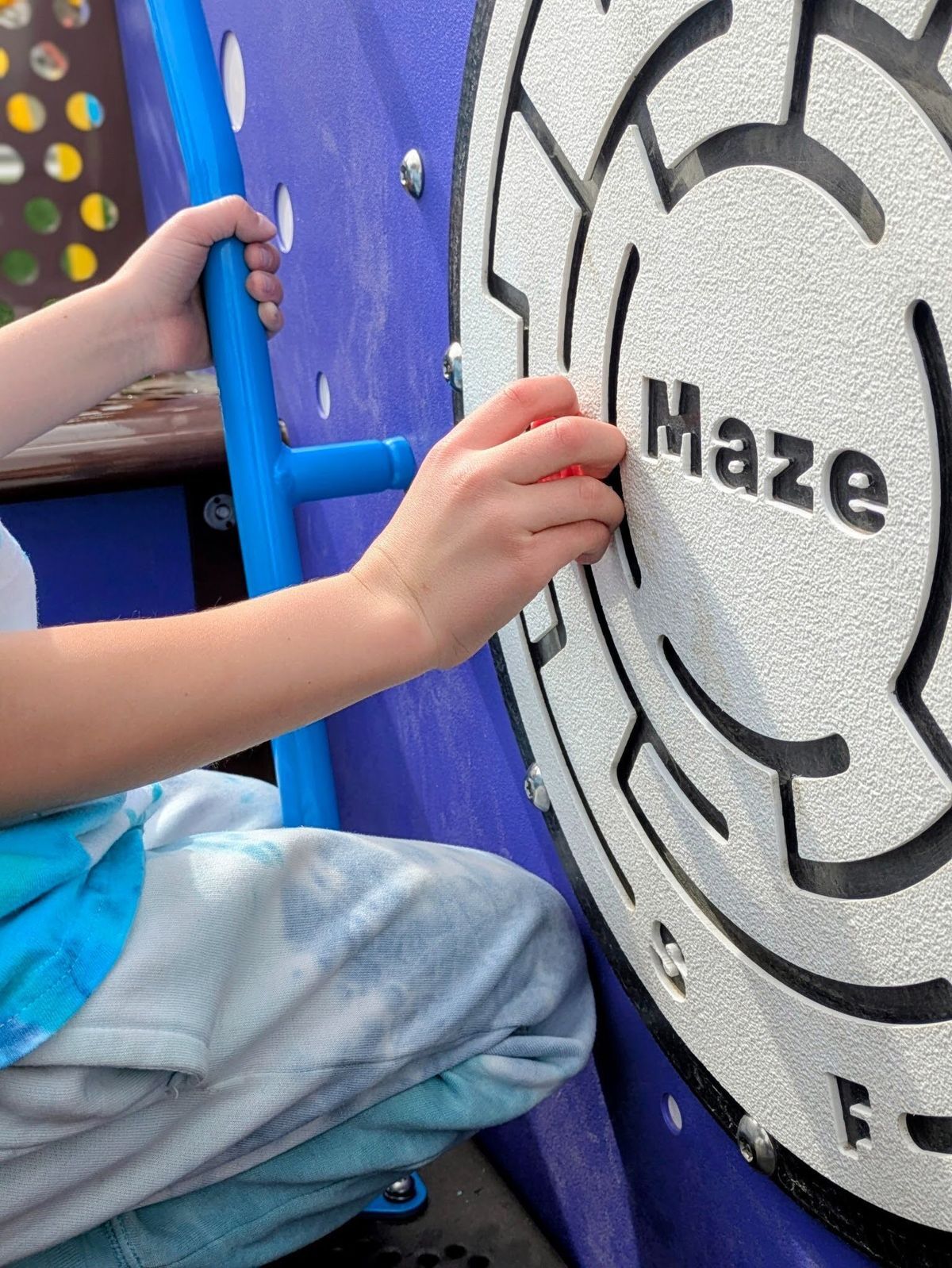
- Active Skill Development: The playground encourages balancing, brachiating, climbing, spinning, sliding, and swinging to build lifelong healthy habits.
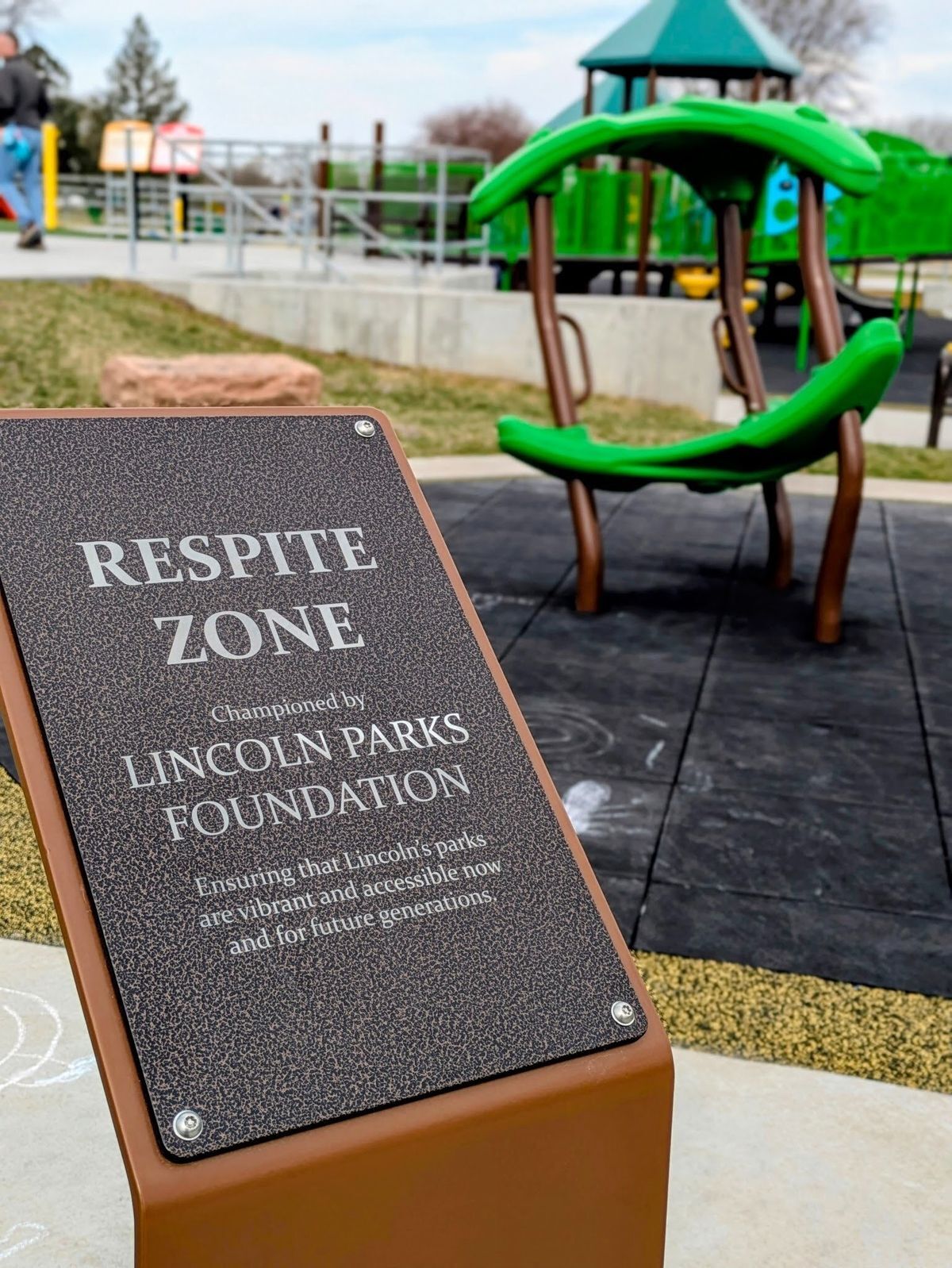
- Sensory-Rich Play: Dedicated zones for water, music, and respite allow children sensitive to stimulation to regulate their environment.
- Multigenerational Fitness: The Outdoor Adult Fitness Park provides evidence-based equipment for caregivers to prioritize their own wellness while maintaining a clear line of sight to their children.
- Side-by-Side Play: Specialized equipment, like blue-and-yellow high-back bucket swings with secure harnesses, allows children of all abilities to soar alongside their peers and siblings.
Leveling the Playing Field for Northeast Lincoln
Grounded in our mission to make Lincoln the healthiest community in the nation, Mahoney Inclusive Playground addresses health disparities identified in our Place Matters data. Its location was a strategic choice; Place Matters highlighted Northeast Lincoln as a high-need area for disability access and socioeconomic support. By placing this facility here, the City of Lincoln is intentionally addressing the disparities behind the data to improve health equity.
A $15,000 grant from the Community Health Endowment (CHE) helped kickstart this momentum.
Following extensive public input and research, the City developed an Outdoor Inclusive Play Strategic Plan. This plan identified the development of four large, inclusive playgrounds in each City quadrant and five enhanced playgrounds near recreation centers across Lincoln. Mahoney Park was the first of the four large sites to be completed, with Antelope Park slated as the next site.
Since its opening, playgrounds at the Easterday, Calvert, and Air Park Recreation Centers have also been updated in alignment with this vision to ensure equitable access to play for every neighborhood.
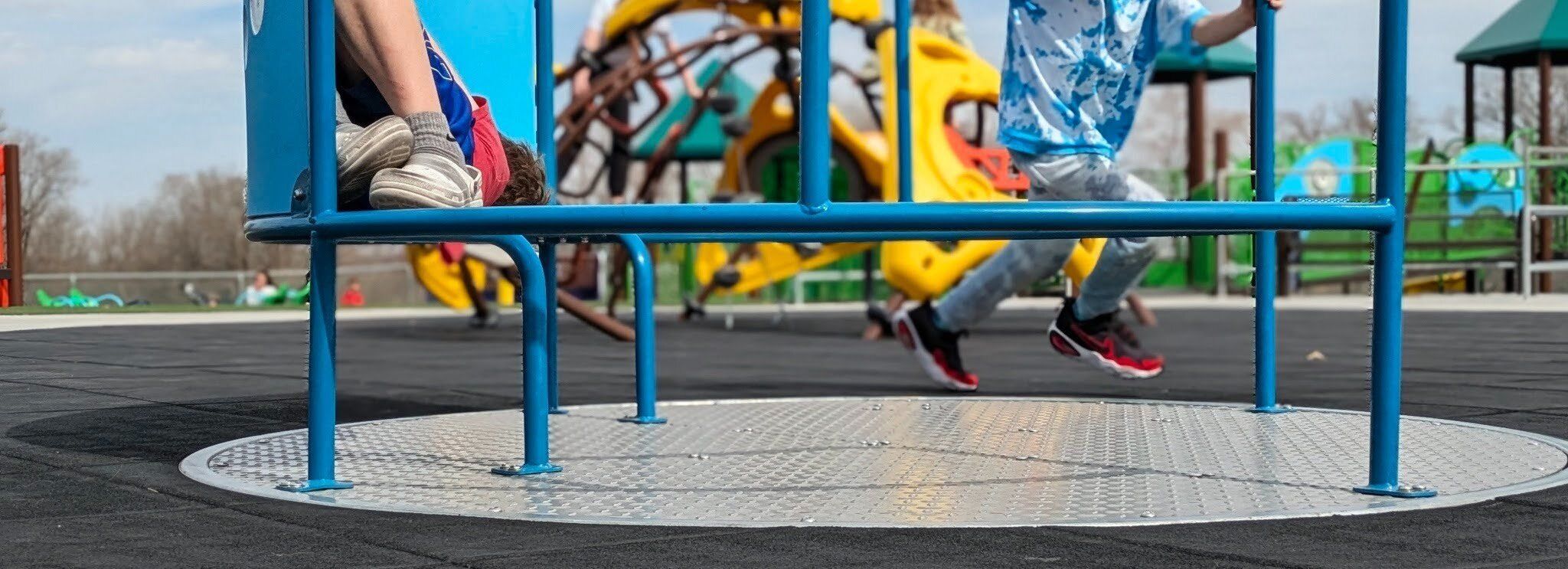
Pictured: Children play on ground-level merry-go-rounds at Mahoney Inclusive Playground, March 29, 2026. (Brittany Wren, Stingray Writing)
“This is really an area of need, and that playground was identified as a place that could serve a variety of needs in that corner of Lincoln," said Randy Gordon, Executive Director of the Lincoln Parks Foundation. "We embraced the idea that play should be for everyone, for all ages and all abilities."
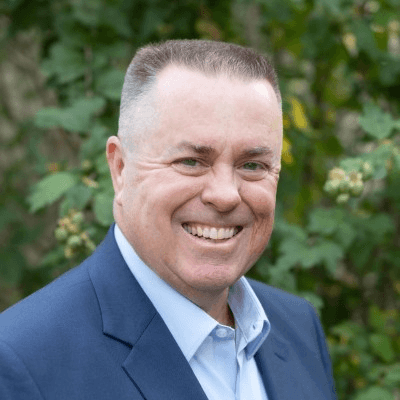
Pictured: Randy Gordon, Executive Director of the Lincoln Parks Foundation. (Courtesy photo)
Adults at Mahoney Park are not limited to the fitness zone; they are encouraged to engage throughout the playground alongside the person they are caring for through parallel play. This type of interaction — participating in the same space or activity while allowing everyone to play in their own way — supports confidence, independence, and connection for all ages and abilities.
For Denise, the impact ripples through the whole family. Cooper’s older sisters, Kali and Leah, now enjoy outings where they can play with their brother rather than just near him.
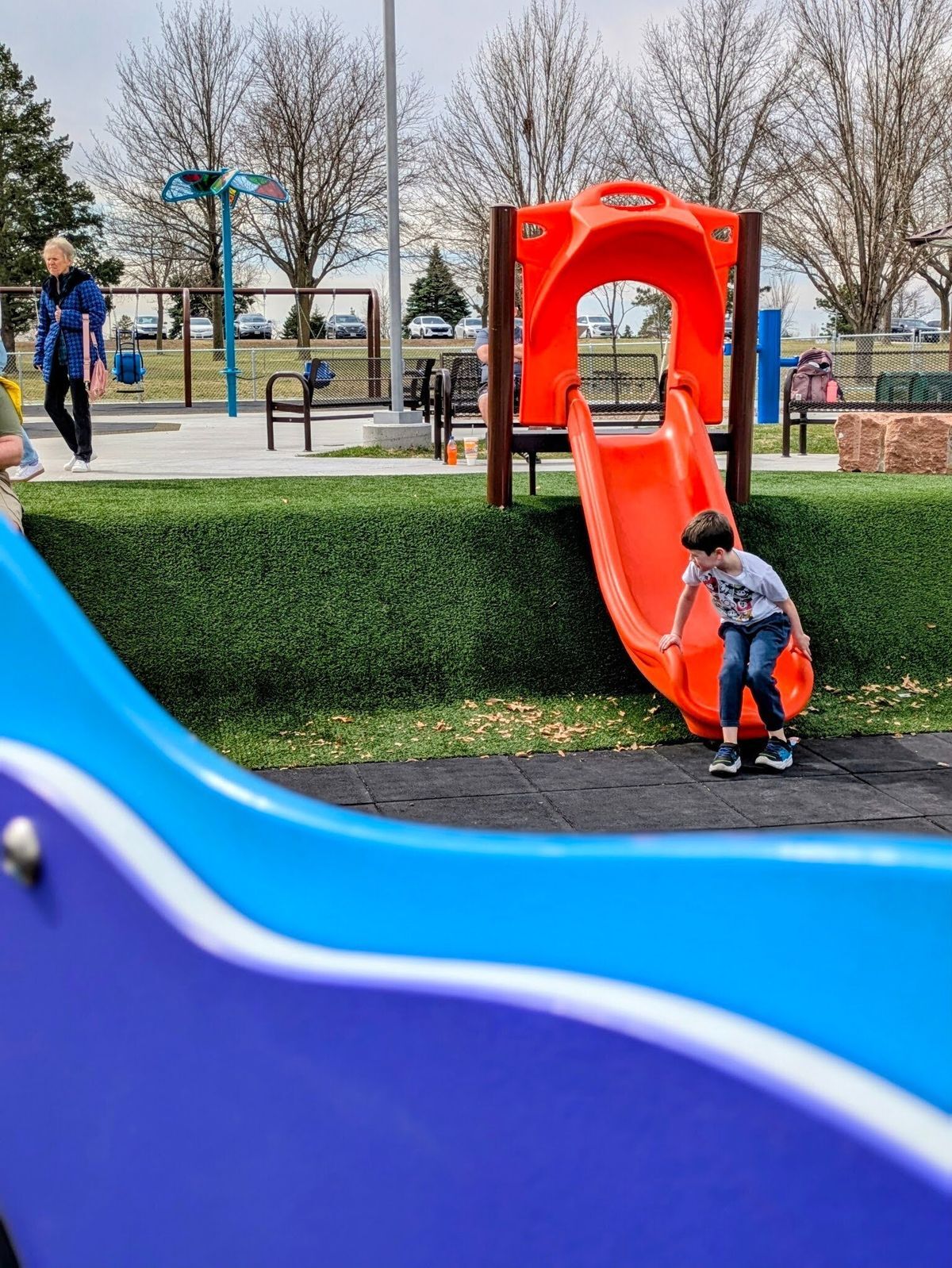
Watching Cooper climb the slides — his favorite part of the park — Denise sees more than just play; she sees her son gaining confidence and motor skills in a world that wasn't originally built for him.
"It’s a nice ability to get them out... without it being so big and scary,” Denise said.
A Vision for the Future
Mahoney Inclusive Playground was made possible by the City of Lincoln, Lincoln Parks and Recreation, Lincoln Parks Foundation, and the Nebraska Game and Parks Commission Land and Water Conservation Fund, with support from the inclusive outdoor play working committee and community partners.
“At the end of the day, health is about more than just a doctor’s visit — it’s about the freedom to move, to play, and to belong,” said Kate Bolz, President and CEO of the Community Health Endowment. “When we invest in spaces like Mahoney, we aren't just building a playground; we are providing more opportunities for children to thrive alongside their neighbors.”
Through strategic investments like Mahoney, the Community Health Endowment isn’t just funding plastic and steel. We are building a city where everybody belongs.